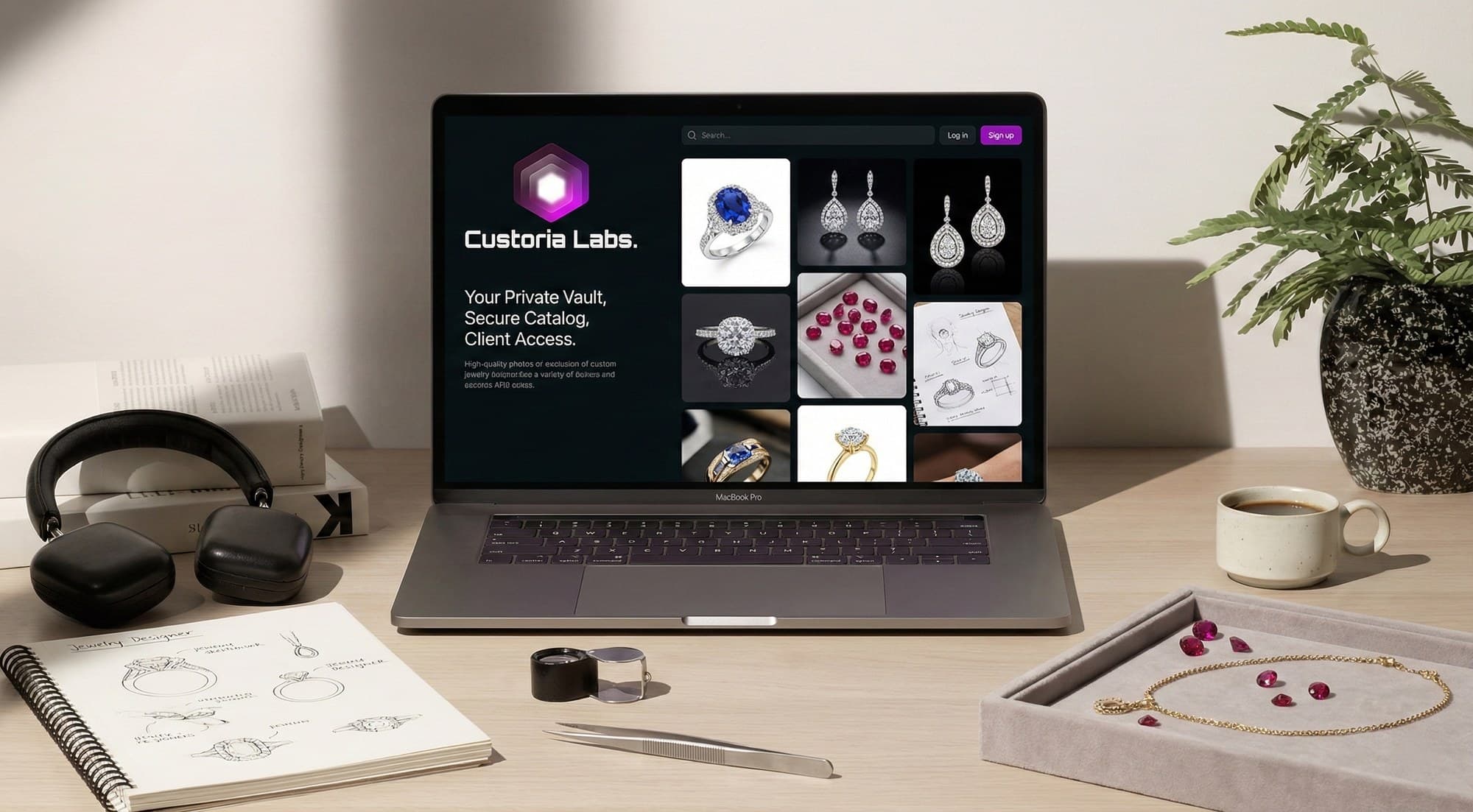
Custoria Labs · co-founded with Yiyi Qin
Founding Custoria: a digital vault for what people value most
Co-founded and built Custoria, a digital vault for what people value most. The hard problem: let owners prove what they hold to an insurer, appraiser, or buyer without exposing their privacy. Designed it end to end, and shipped it to the App Store in Swift.
Origin
We killed a product with product-market fit
Custoria began as our MBA Design Strategy thesis: a consumer data-privacy app. It found product-market fit, and we killed it anyway. The real problem was distribution: privacy is already owned by legacy trust brands, privacy-first challengers, and the platforms that bundle it free. A better product doesn't win that market. A different market does.
The wedge came from my co-founder, Yiyi Qin, who works in jewelry and art galleries: ~20,000 galleries worldwide, plus collectors and appraisers, carrying real insurance and consignment risk on objects they track with tools never built for it. Our privacy playbook mapped straight on. Custoria became a digital vault for the things people value most, with privacy as the spine, not a settings page.
"Every time an agent takes that Yayoi Kusama Pumpkin for a client viewing, I'm on edge. As a gallery manager, once the work leaves my hands, I can't sleep."
The hard problem
Sharing that proves, without exposing
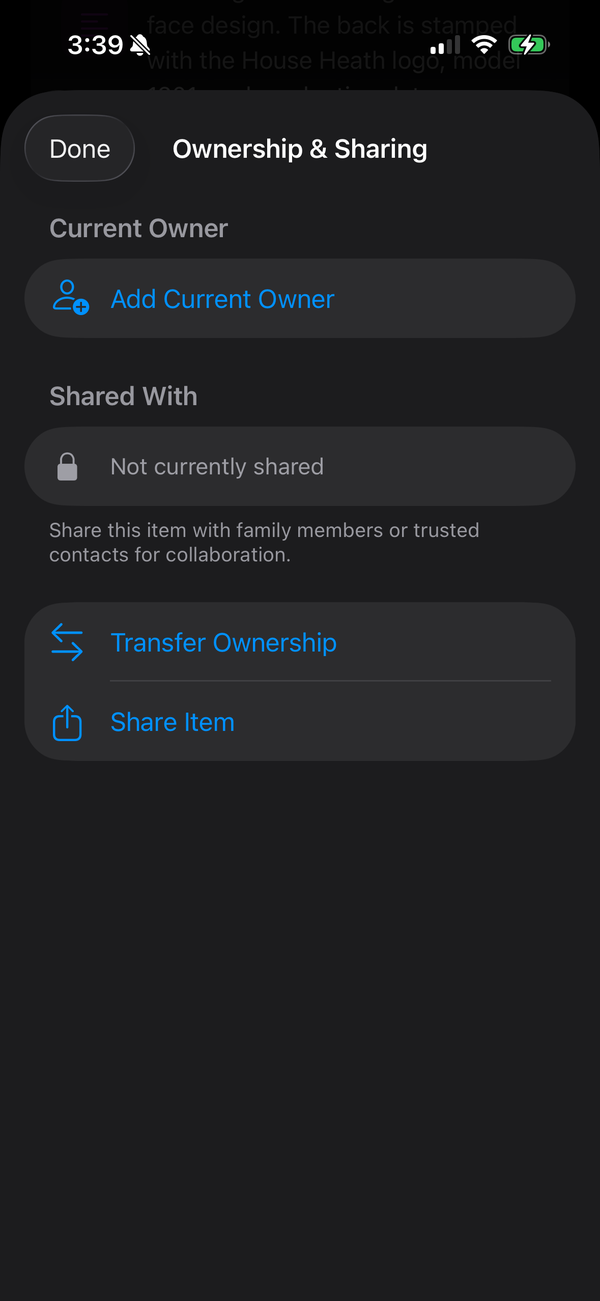
The sharing model is the product. The vault is encrypted and biometric-locked; the hard part was the share: proving ownership, value, and authenticity to an insurer, appraiser, or buyer without compromising privacy. So the owner gets three dials:
- What: field-level control over which facts a share exposes.
- How long: every share is time-boxed.
- Who: named or anonymous, because proving you own something shouldn't force you to reveal who you are.
Every share carries a Custoria watermark and stamp of authenticity: trust for whoever receives it, and our brand in front of the insurers and appraisers we need to reach, the distribution lesson from v1, designed into v2. Underneath, zero-knowledge encryption and a blockchain-backed chain of ownership do the enforcement the legalese usually pretends to.
1 · What gets shared
2 · For how long
3 · As whom
What the recipient sees
Heath Ceramic Clock
✓ Custoria verified- Ownership
- Verified · proof of purchase
- Estimated value
- $2,500
- Brand / maker
- Heath Ceramics
- Authenticity
- Stamped · AI + documentation
Building it
Designed and coded by the same two hands
The whole product is one flow: point a camera at something you own, and seconds later it's a protected, valued record in your vault.
Capture
A guided scan asks for 3–5 photos from different angles.
Effort is front-loaded once, so accuracy never becomes the owner's job.
Review
The app confirms it has enough: “Ready for AI analysis.”
Confidence is shown before the work starts, not just after.
Analyze
Gemini Flash reads the images, identifies, prices, cross-references.
The wait is narrated step by step, so the AI reads as accountable.
Identify
Name, brand, model, year, condition, rarity, value, as fields.
Structured and editable, never a chat blob the owner can't inspect.
Confirm
92% confidence shown; the owner edits any field, then saves.
The AI proposes, the owner disposes; final say stays with the human.
Vault
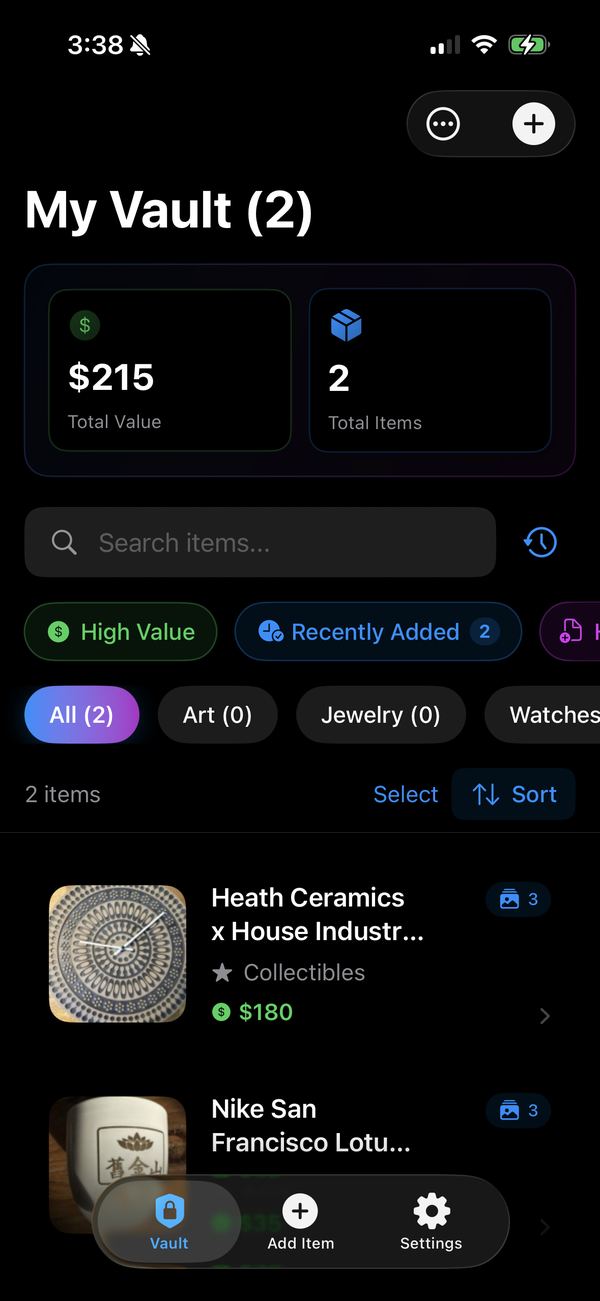
“Item added.” Totals tick up live to $215 across 2 items.
Capture closes where ownership begins: a protected, valued record.
I own the design end to end, and the code. Custoria is a native iOS app in Swift, with Gemini Flash doing the unglamorous work that makes the vault effortless: scan an item and the AI names it, fills the metadata (value, brand, ID), and tags it. No forms, no manual cataloging. Add a receipt or certificate and the record gets stronger.
Coding it changed how I design:
- Owning the dependencies made me think in systems at scale.
- Owning the data pipeline taught me it's a differentiator, not plumbing.
- It surfaced what a Figma file can't: how fast and how reliably the app feels, the things users judge in the first thirty seconds.
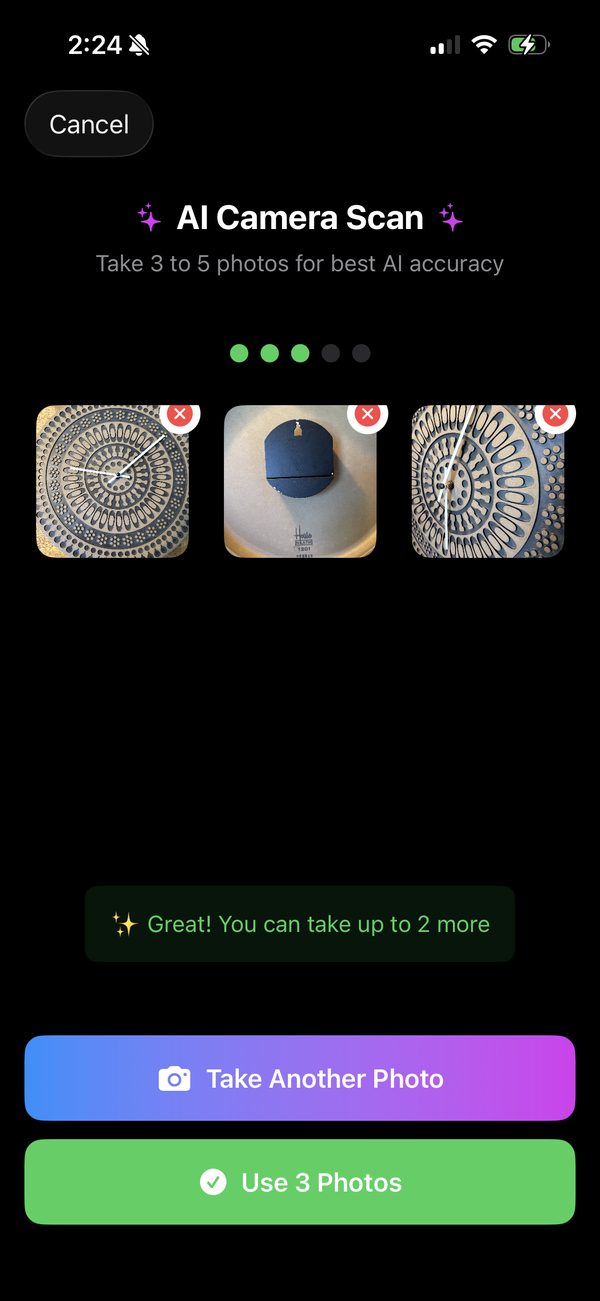 01
01Capture
Point the camera and take a few photos. No forms, no manual cataloging, the shortest path from an object to a record.
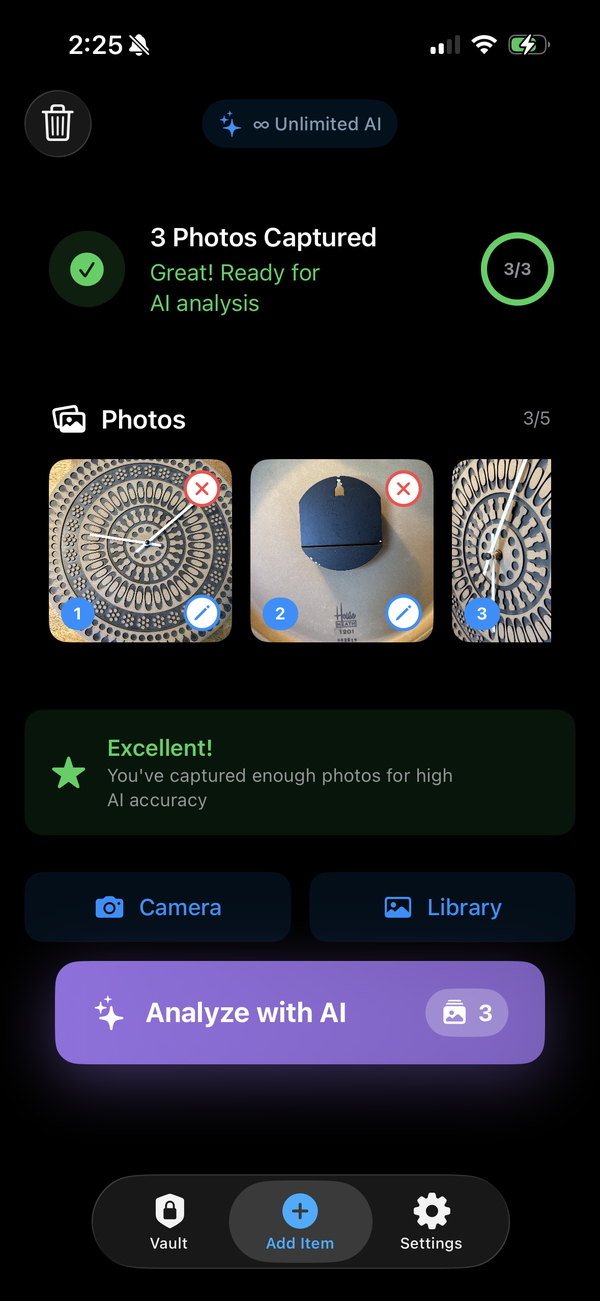 02
02Analyze
One tap hands the photos to Gemini Flash. The unglamorous work happens here so the vault stays effortless.
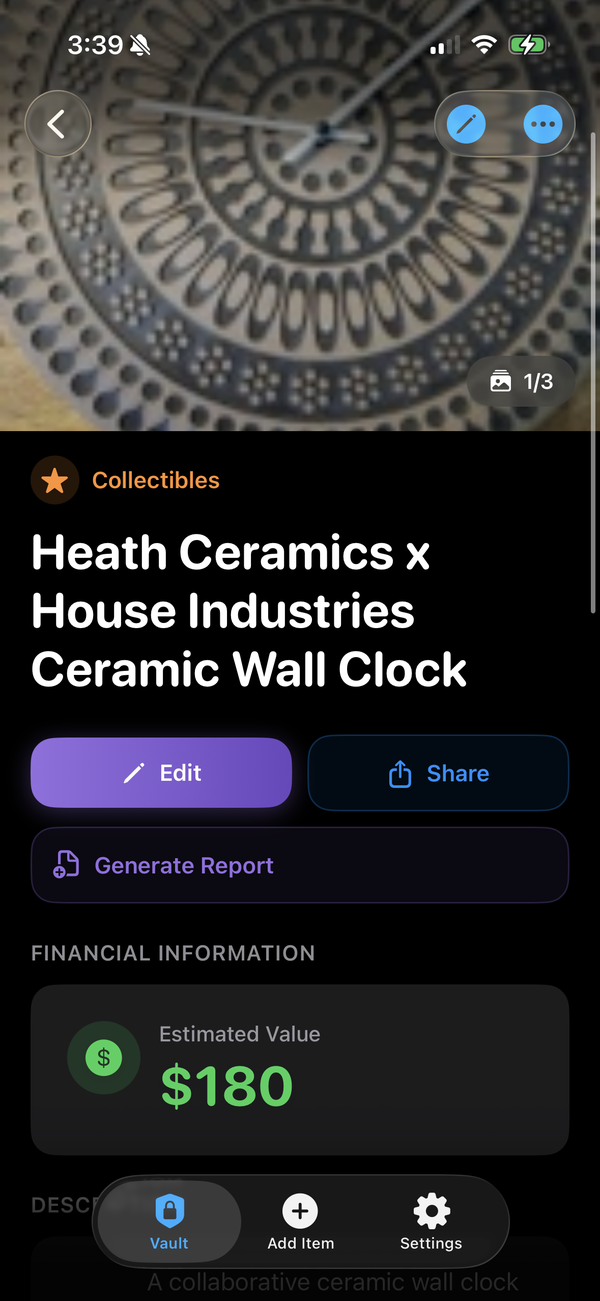 03
03Identify
The AI names the piece, prices it, and fills the metadata: value, brand, identification, categories and tags.
 04
04Vault
Everything you own, valued and searchable, encrypted and biometric-locked. Add a receipt or certificate and the record gets stronger.
 05
05Share
Three dials: which fields a share exposes, how long the link lives, and whether you are named or anonymous.
 06
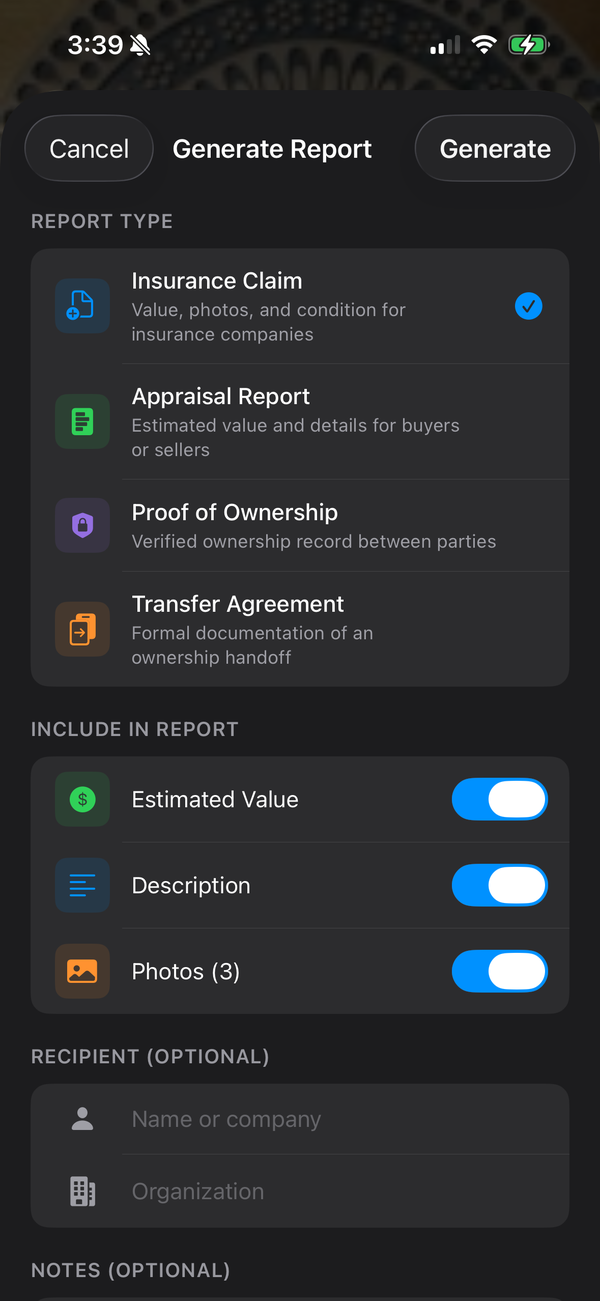
06Prove
Appraisal and proof-of-ownership reports on demand, each carrying the Custoria watermark and stamp of authenticity.
The design language
A vault that looks like one
As the product matured, the brand caught up with the value prop. We rebuilt the design system around the people the vault protects, serious collectors and an international user base, with three moves:
- Vault-dark surfaces. Near-black interiors that feel like the inside of a safe, and make jewelry photography read like a catalog.
- Appraisal serifs. Values and item names set in serif numerals, so a $2,800 record carries the weight of an appraisal document.
- A status language, not status text. Gold for unverified, green for AI confidence, purple for the brand at work: states that read at a glance in any language.
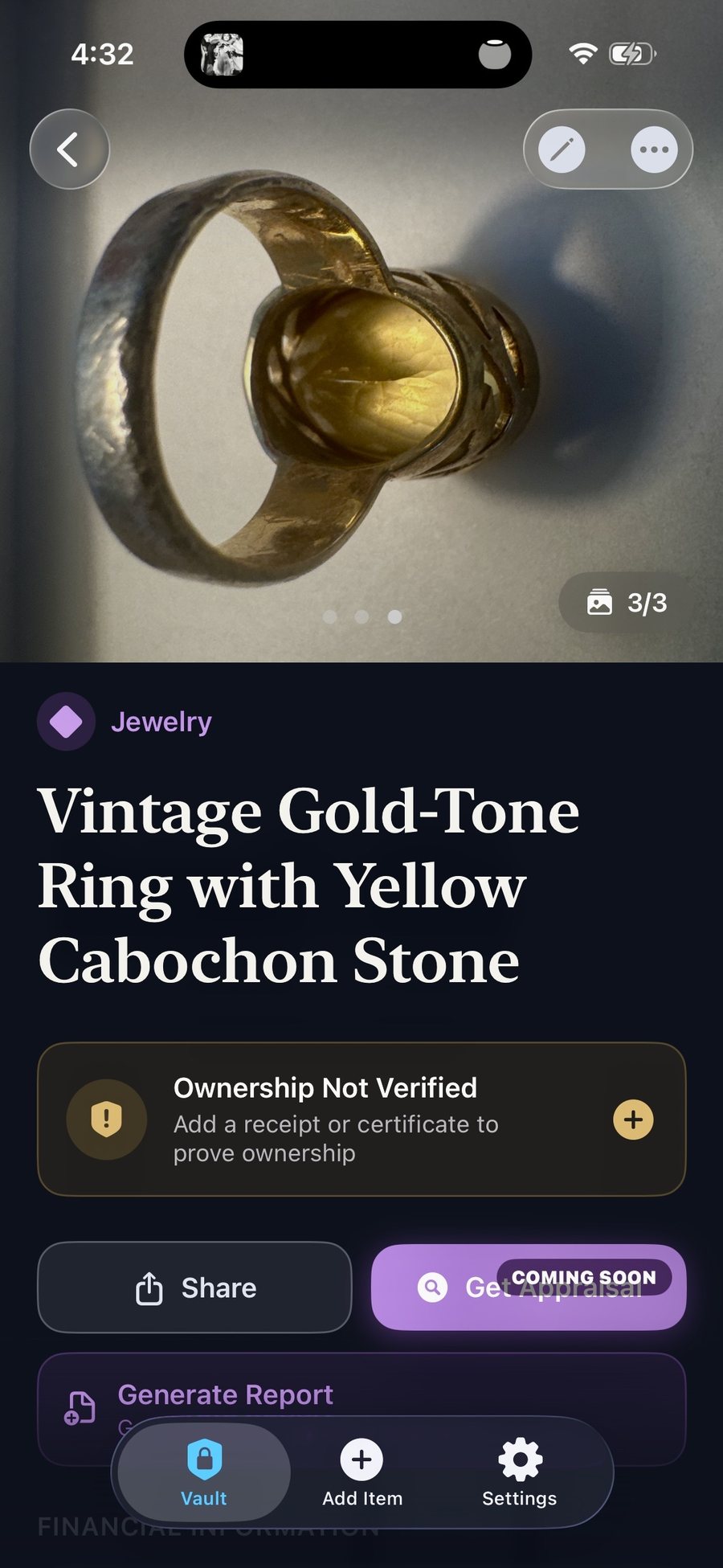
Item record
Photography first, serif title, verification up top.
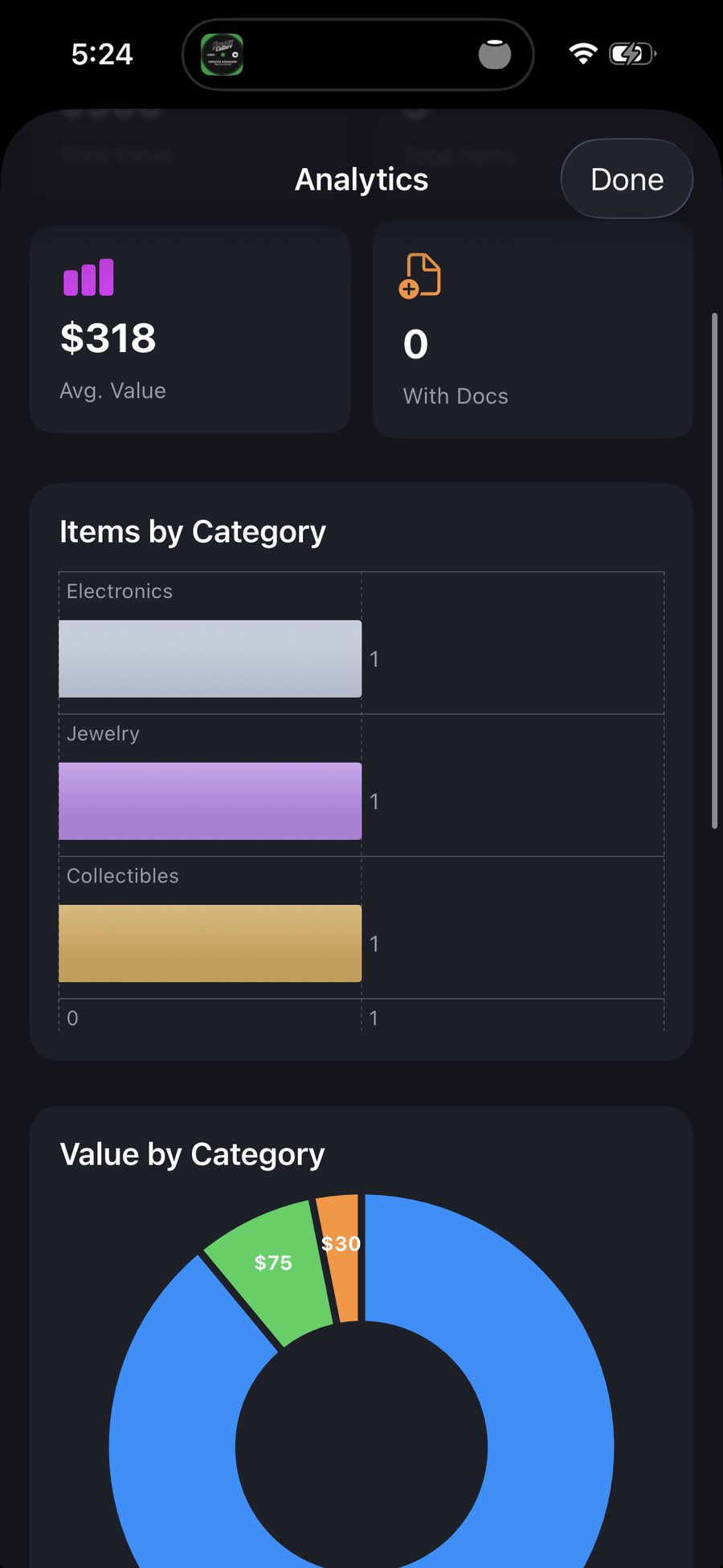
Analytics
A collection read like a portfolio: value and coverage by category.
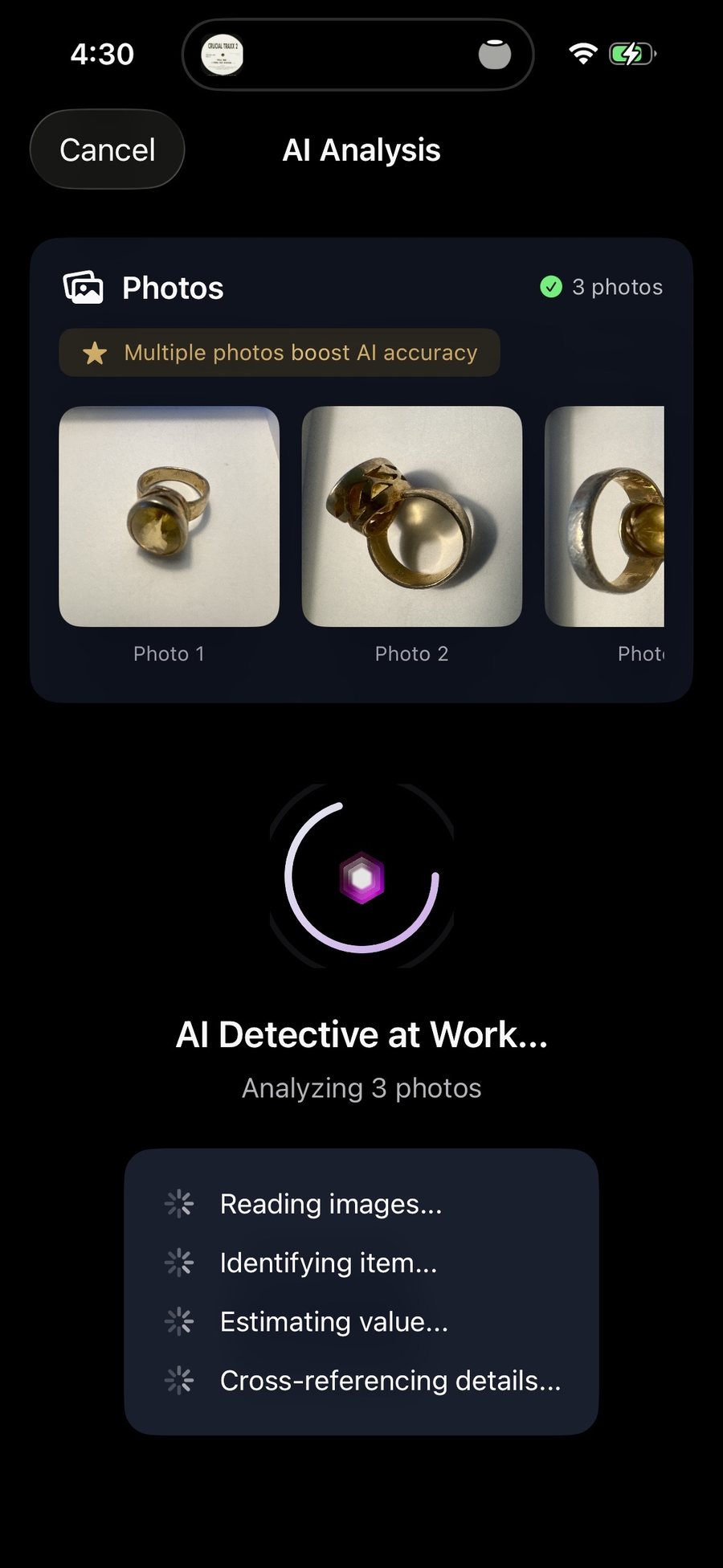
AI at work
Analysis as a concierge moment, not a spinner.
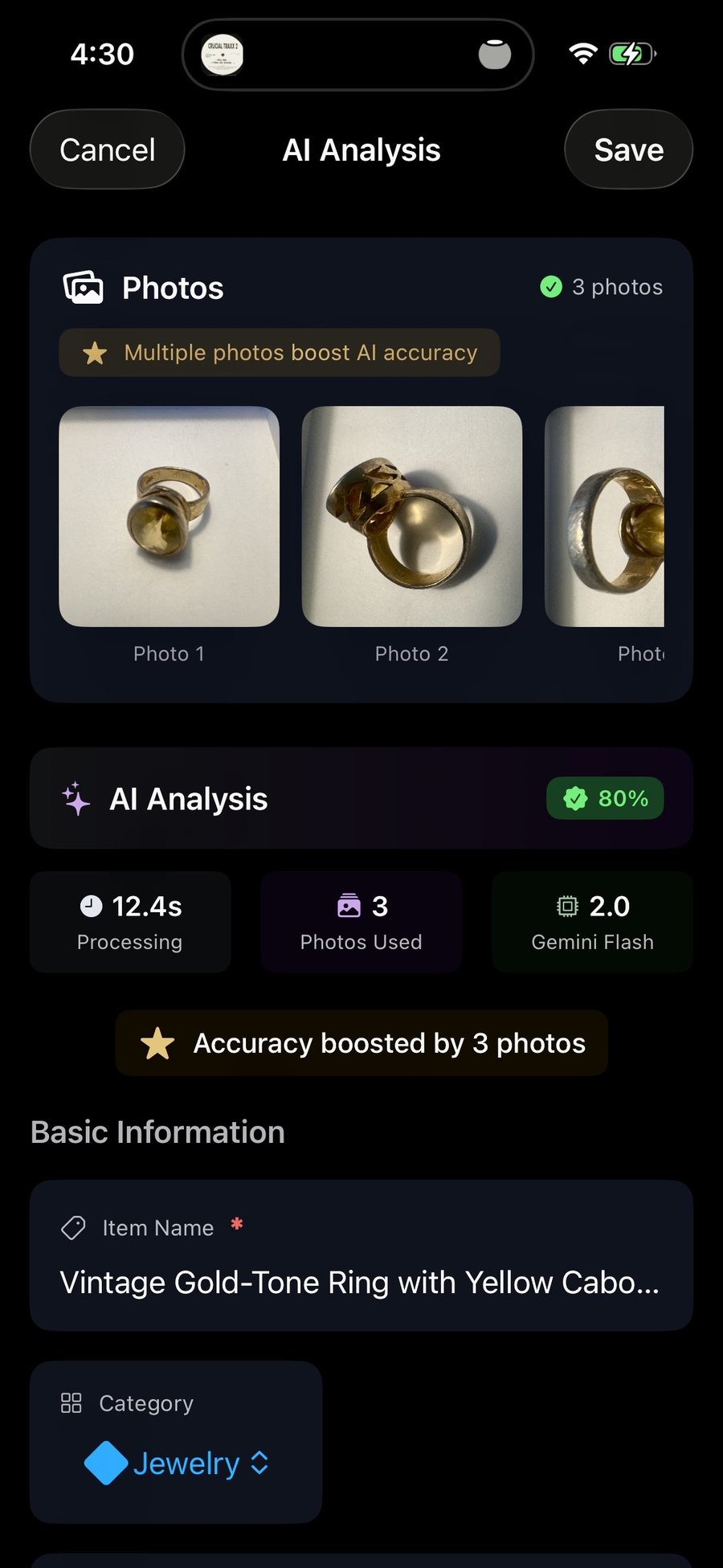
AI result
Confidence, time, and model, stated plainly.
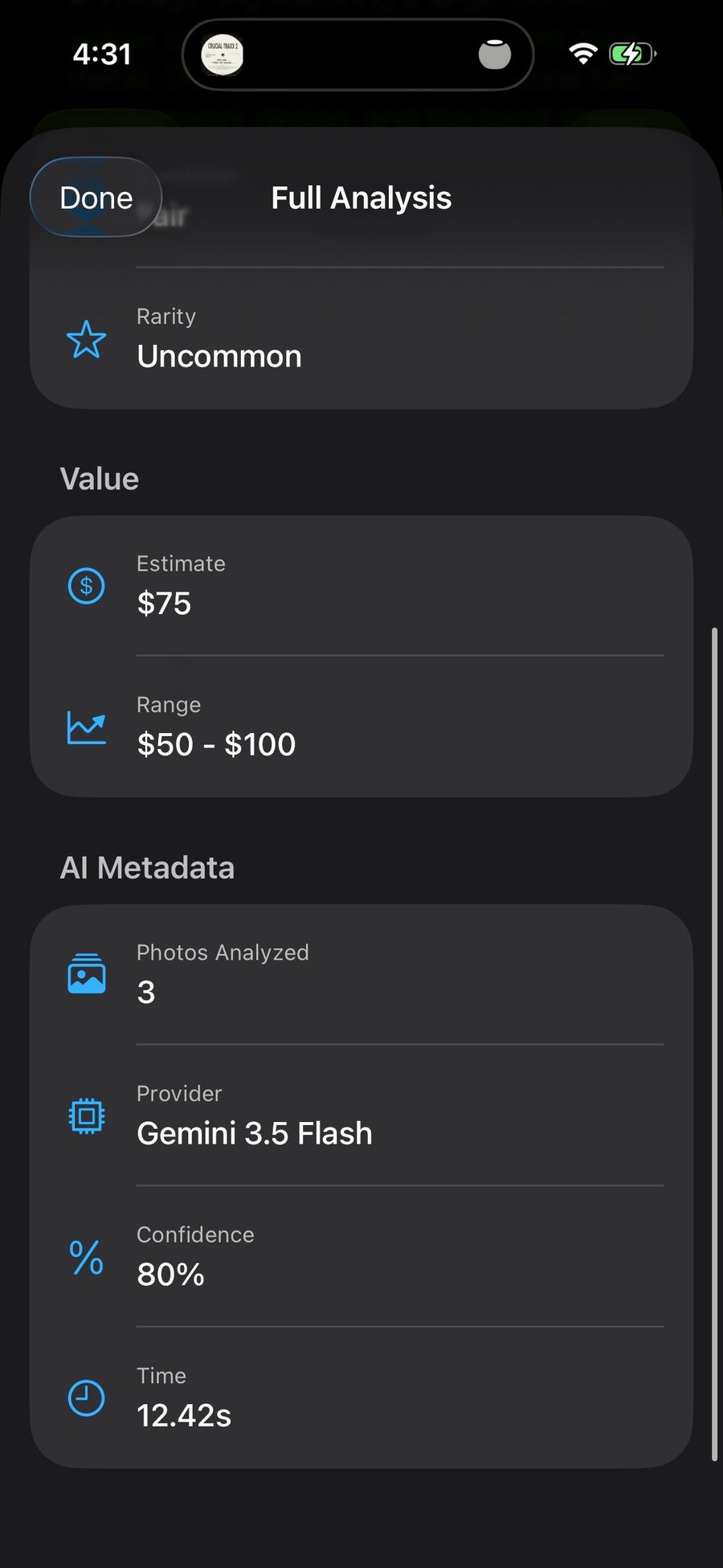
Valuation
Estimate, range, and rarity in appraisal serifs.
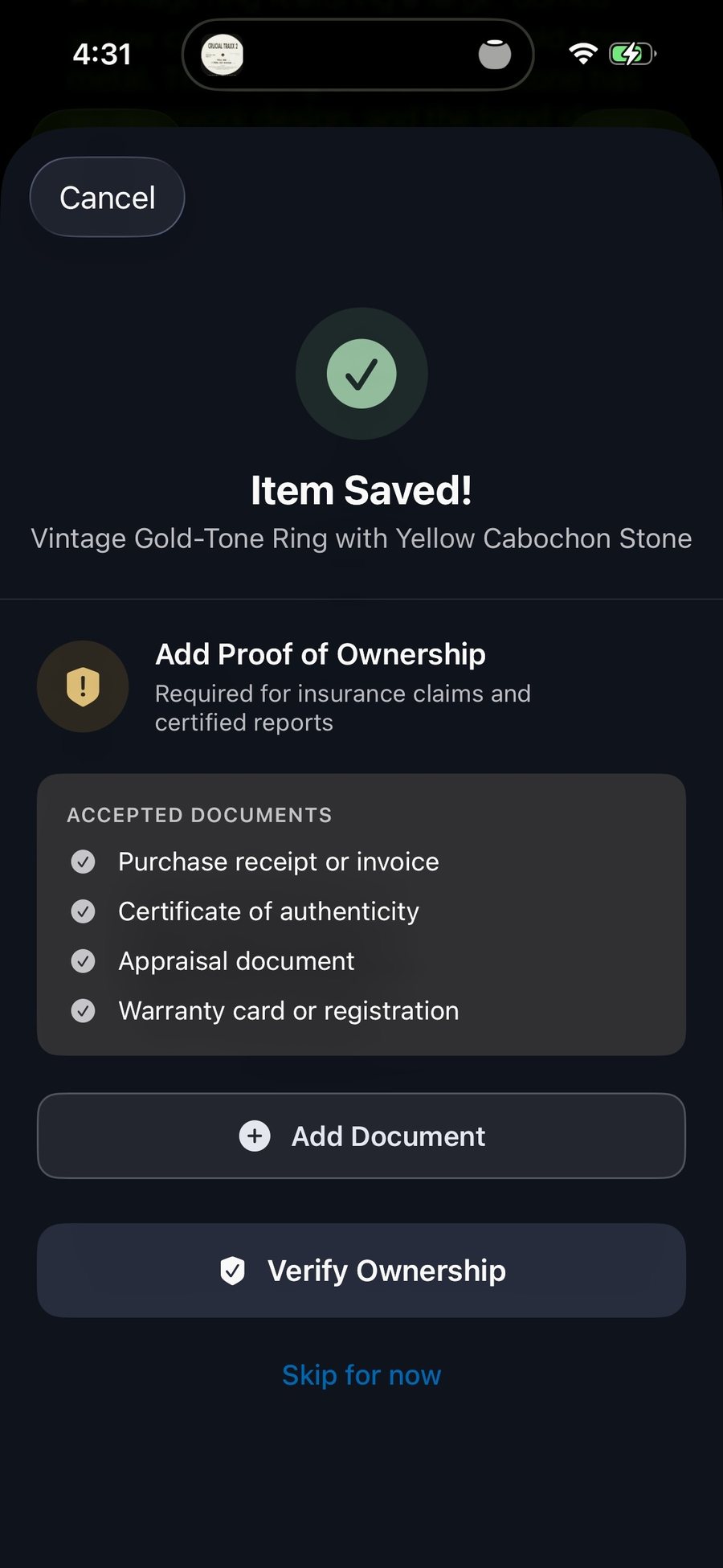
Proof
Every item prompts the documents that make it provable.
Where it stands
Piloted, measured, and shipped
MVP pilots have run since late 2025, and the early numbers say the workflow replacement is real: records 2× more accurate on details, value, origin, and ownership than manual methods, and a ~90% cut in loss-and-risk exposure.
The app is live on the App Store, ~150 users in the first 90 days. Next: converting the gallery pilot network into the first paying customers.