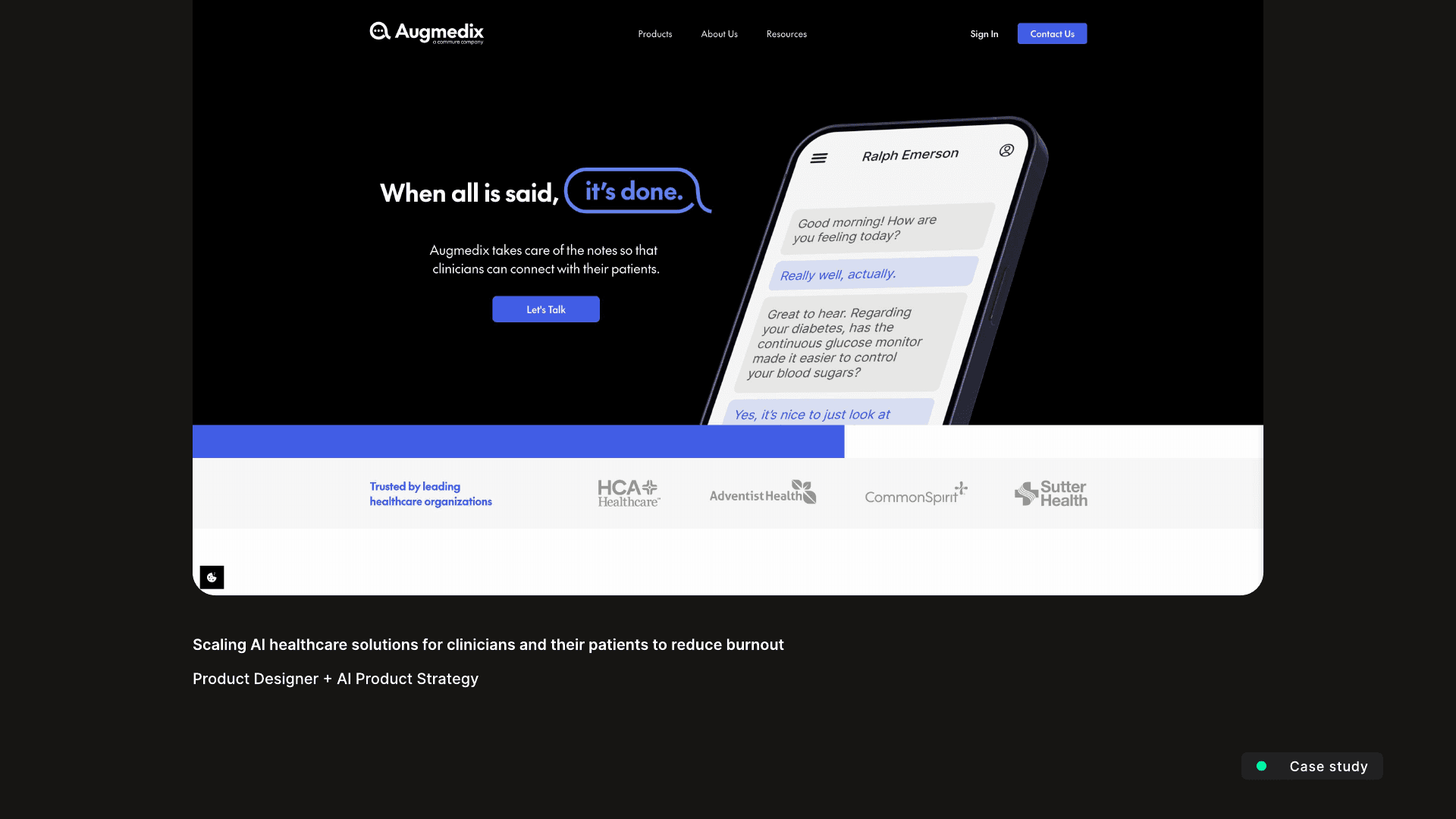
Augmedix (acquired by Commure, $139M)
Scaling AI clinical documentation from one product to four
- Role
- Product Designer, AI & Growth
- Timeline
- Oct 2023 – Nov 2024
- Scope
- Web + mobile products, design system, agentic AI integration
- Outcome
- +65% engagement in a year; acquisition by Commure (2024)
Live product

Scaling Augmedix's AI clinical documentation from one product to four, then through a $139M acquisition. I owned the design system, and the bet on modular over one-size-fits-all that let it scale without fragmenting.
Context
Clinicians were paying for AI with their evenings
Healthcare systems face a worsening clinician shortage; documentation is a leading driver of burnout, with notes written on personal time long after patients leave. Augmedix's AI already drafted clinical notes, but as one rigid product in a market where every clinic, specialty, and clinician works differently.
The challenge
One agentic system, four purpose-built products, zero tolerance for error in healthcare
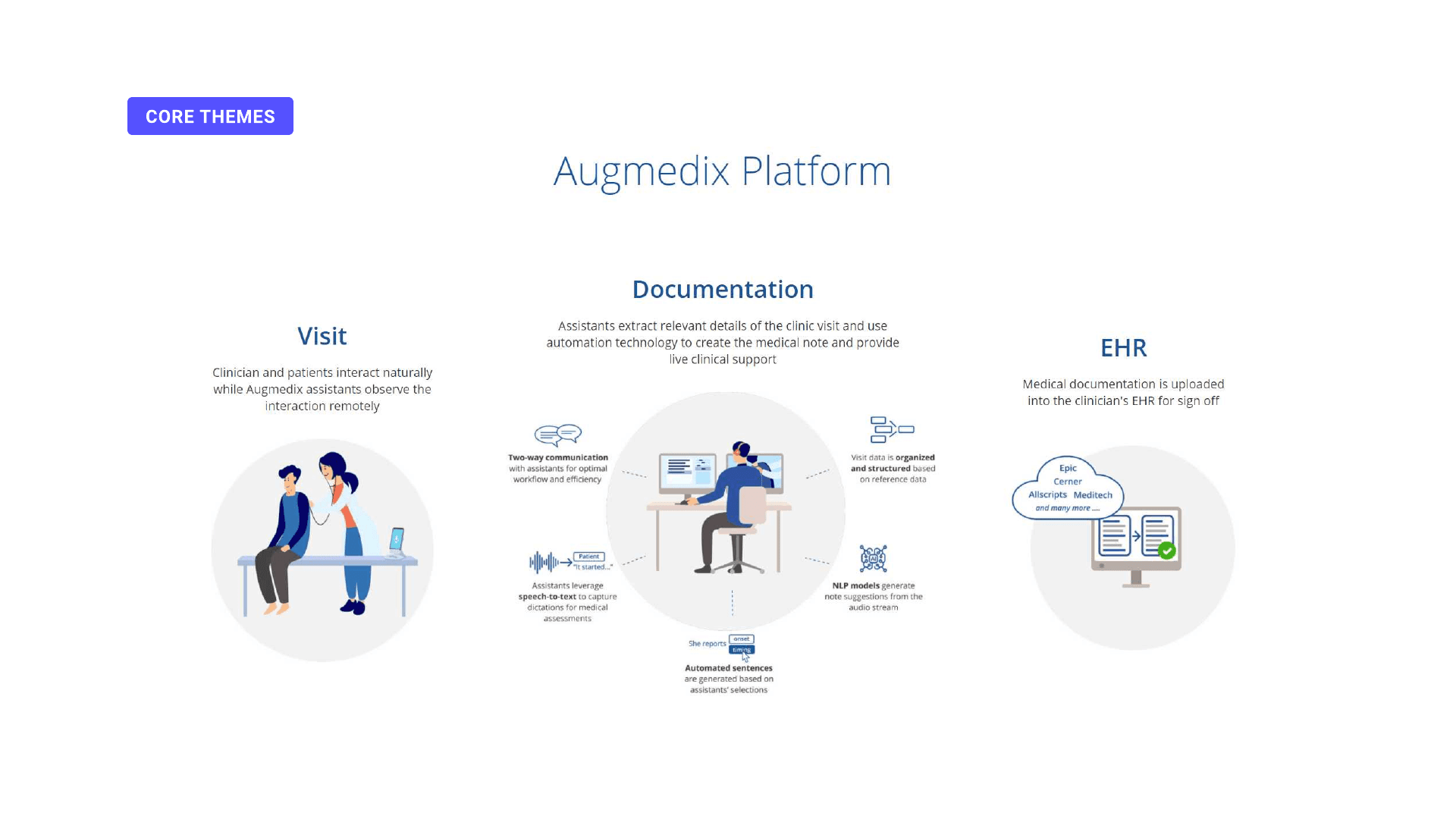
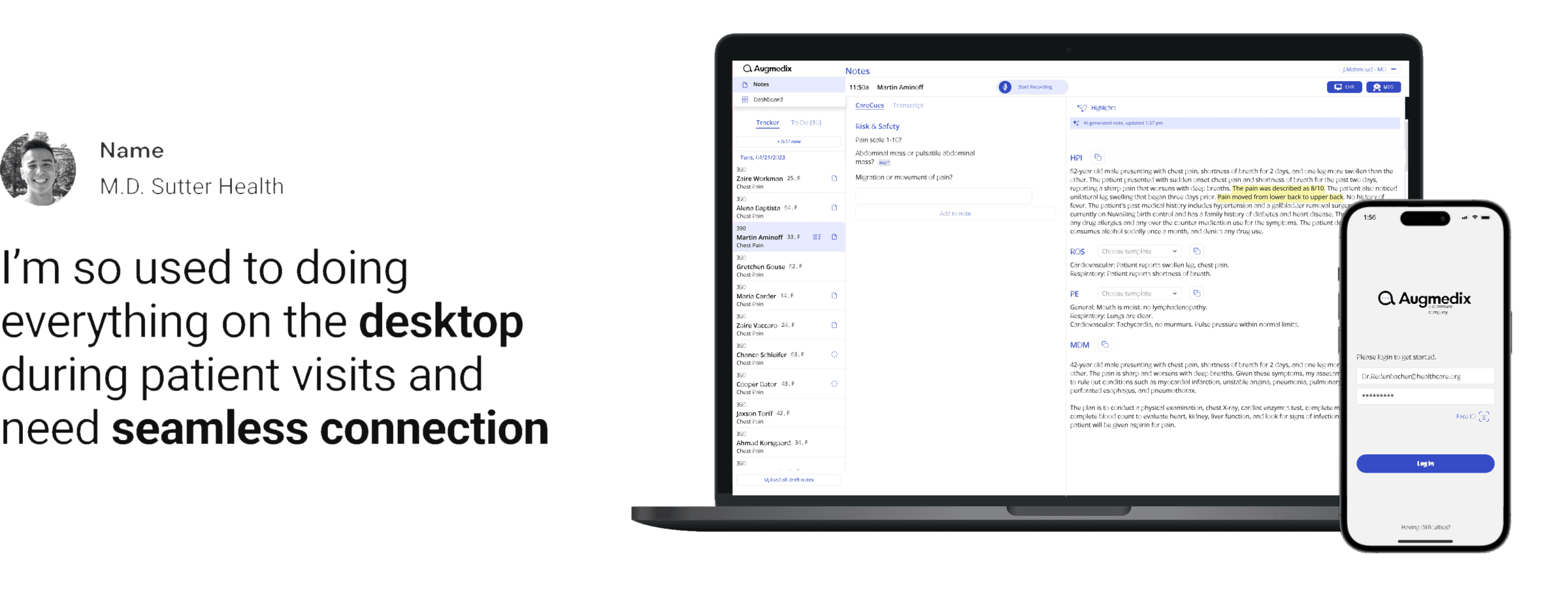
Growth meant one offering becoming four, across web and mobile, emergency and primary care, without fragmenting the experience. Research set two constraints: ~40% of clinicians wanted a human in the loop, and 30% asked for a desktop workflow to finish notes where they already lived, the EHR. We rebuilt around both: capture on the move, finish at the desk.
"So far the technology speeds up my workflow, but I still have to remember to check when the note is ready, and spend time reviewing it. I don't fully trust the AI to get it right."
The decision
A flexibility flywheel, and the system that shipped it
The first product, Augmedix Go, launched as a pure-AI scribe. Model accuracy kept improving, but retention settled near 43%. The blocker wasn't the model. It was fit: clinicians were bending their work to the tool instead of the other way around.
Under deadline, our PMs advocated one-size-fits-all, the clearest path to shipping. I argued the opposite, on two grounds:
- Rigid workflows would cap the AI itself. Every clinician who adapts the tool generates the feedback the models need to improve.
- Clinicians weren't rejecting AI. Onsite at HCA hospitals, they were rejecting being told how to work.
We shipped the modular approach, templates, preferences, self-serve settings, within the same timeline, and it became the foundation the product scaled on.
To hold four product lines together (Go, Assist, Live, and the MDS console), I built the web and mobile design system: the connective tissue across nine PMs and AI leads that let us fold a new agentic model into the core flow and ship it in four months.
The agentic model raised the stakes: an agent drafting a clinical note makes calls a clinician signs their name to. So the core interaction is review and repair, not automation theater. The AI drafts and shows what it flagged; the clinician corrects; every correction becomes training signal. The ~40% who wanted a human in the loop were right about where the trust had to live.
Capture
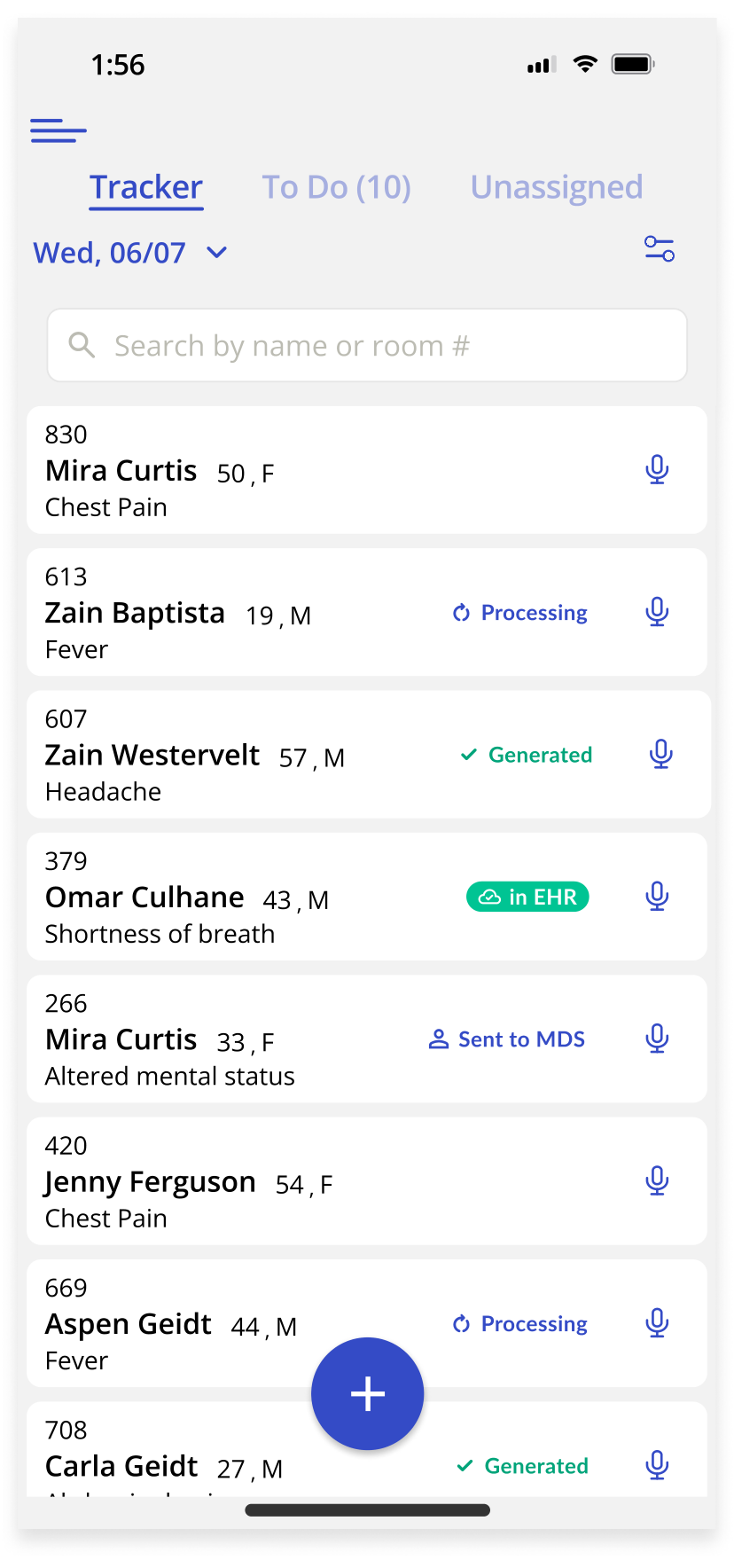
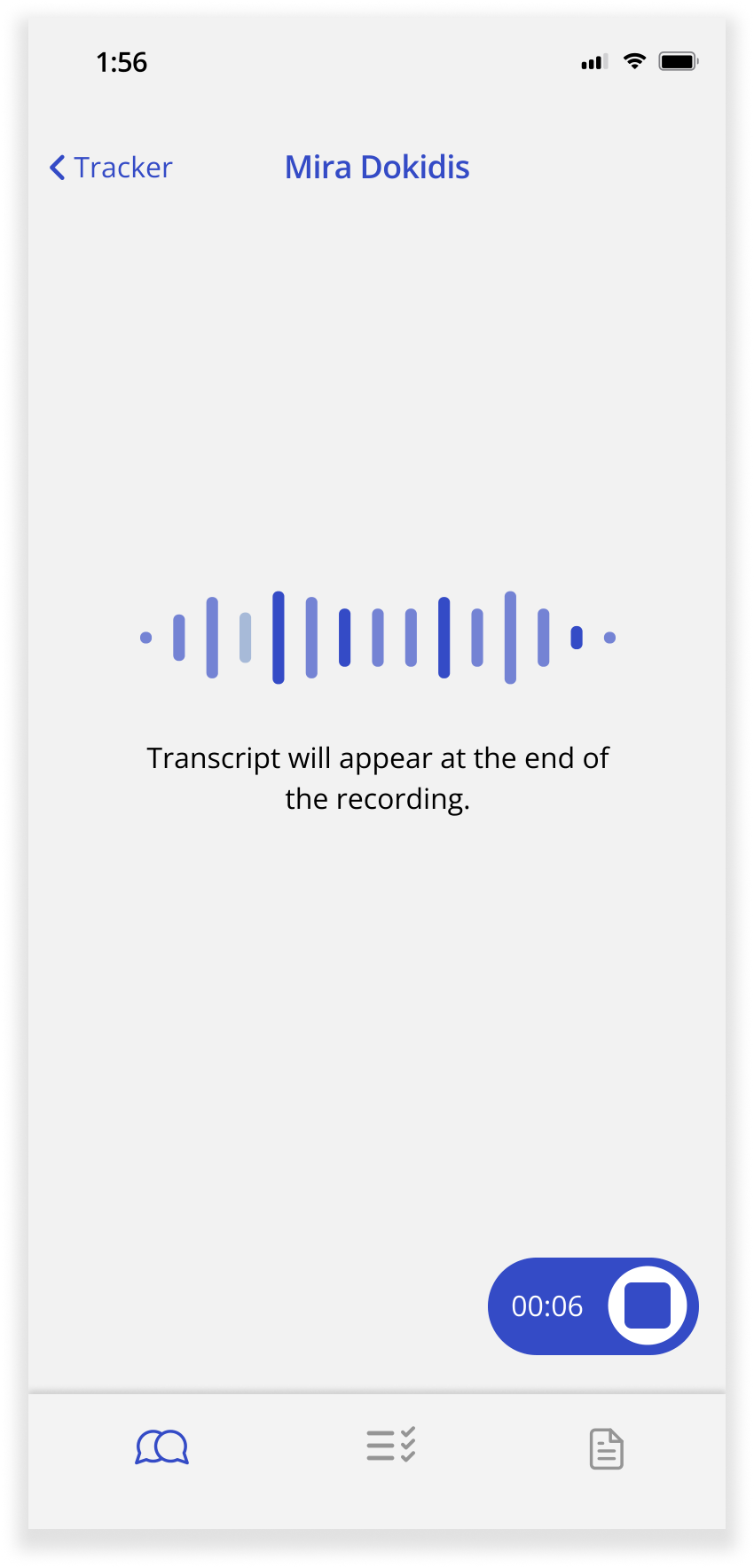
The shift queue. One tap on the mic starts an ambient recording.
Listen
Augmedix listens to the visit; the transcript builds in the background.
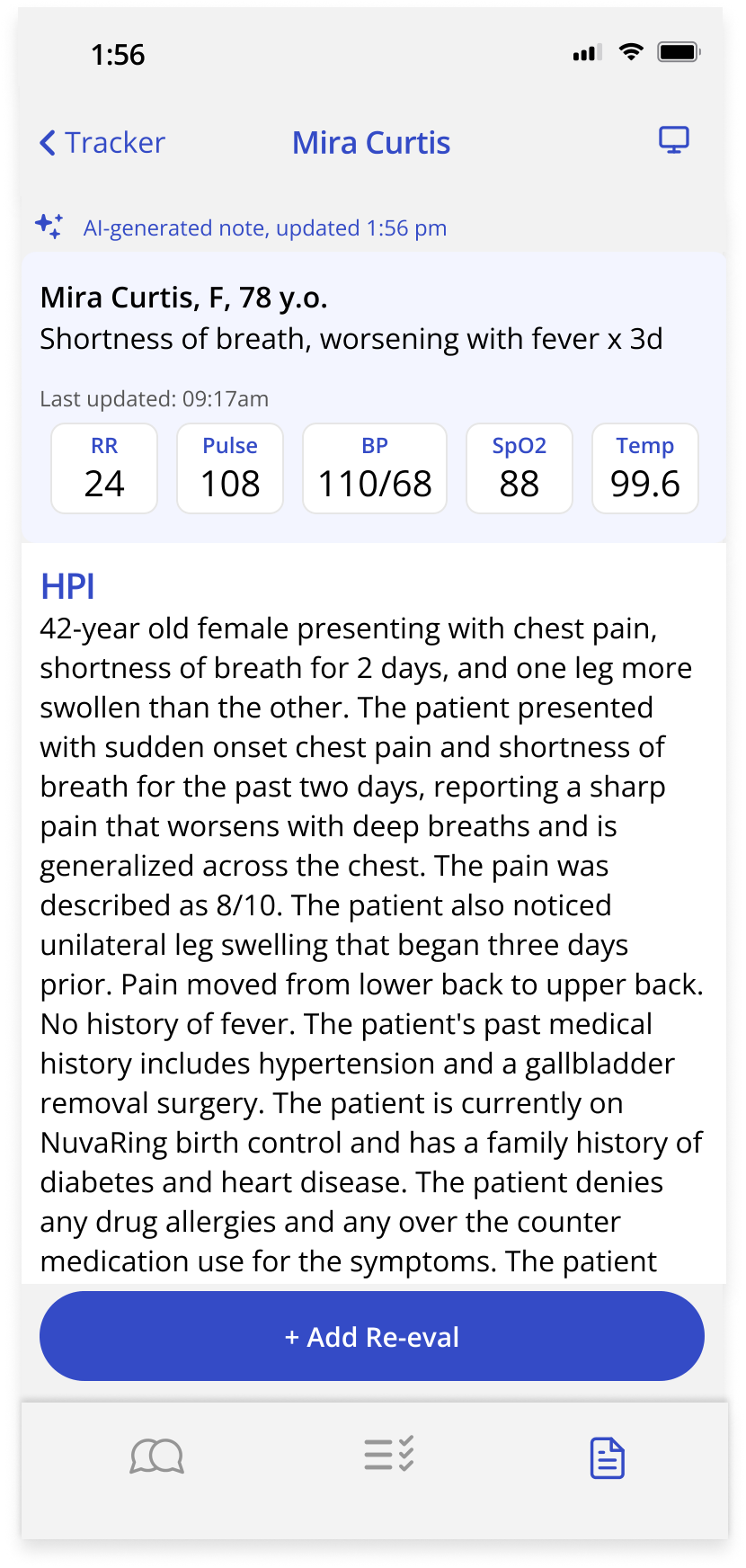
Note
Seconds later, a structured note the clinician can sign or refine.
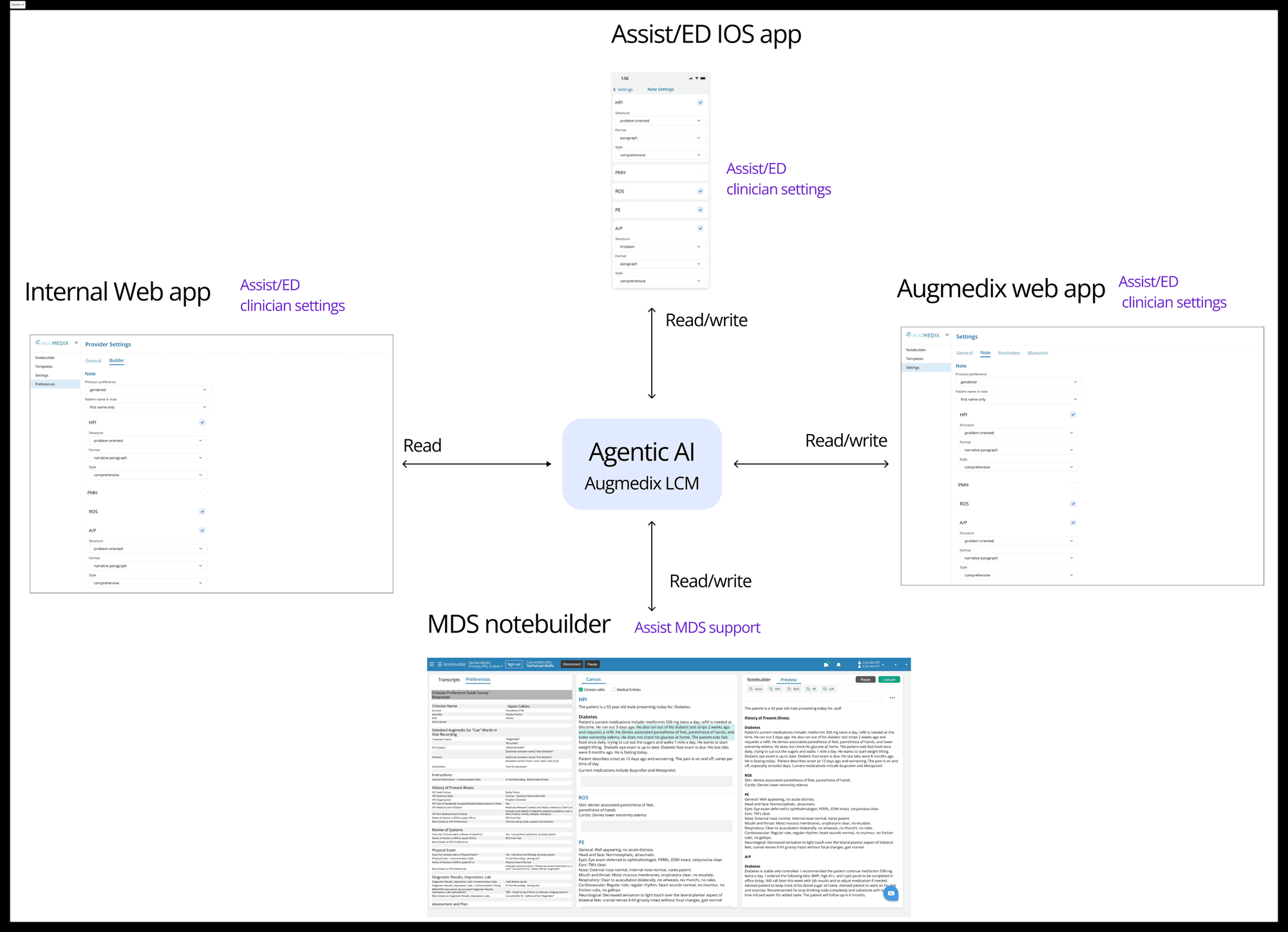
One agentic model sat behind all of it, the Augmedix LCM, reading and writing across the mobile app, the web app, and the MDS console, so a correction in one surface improved every other.
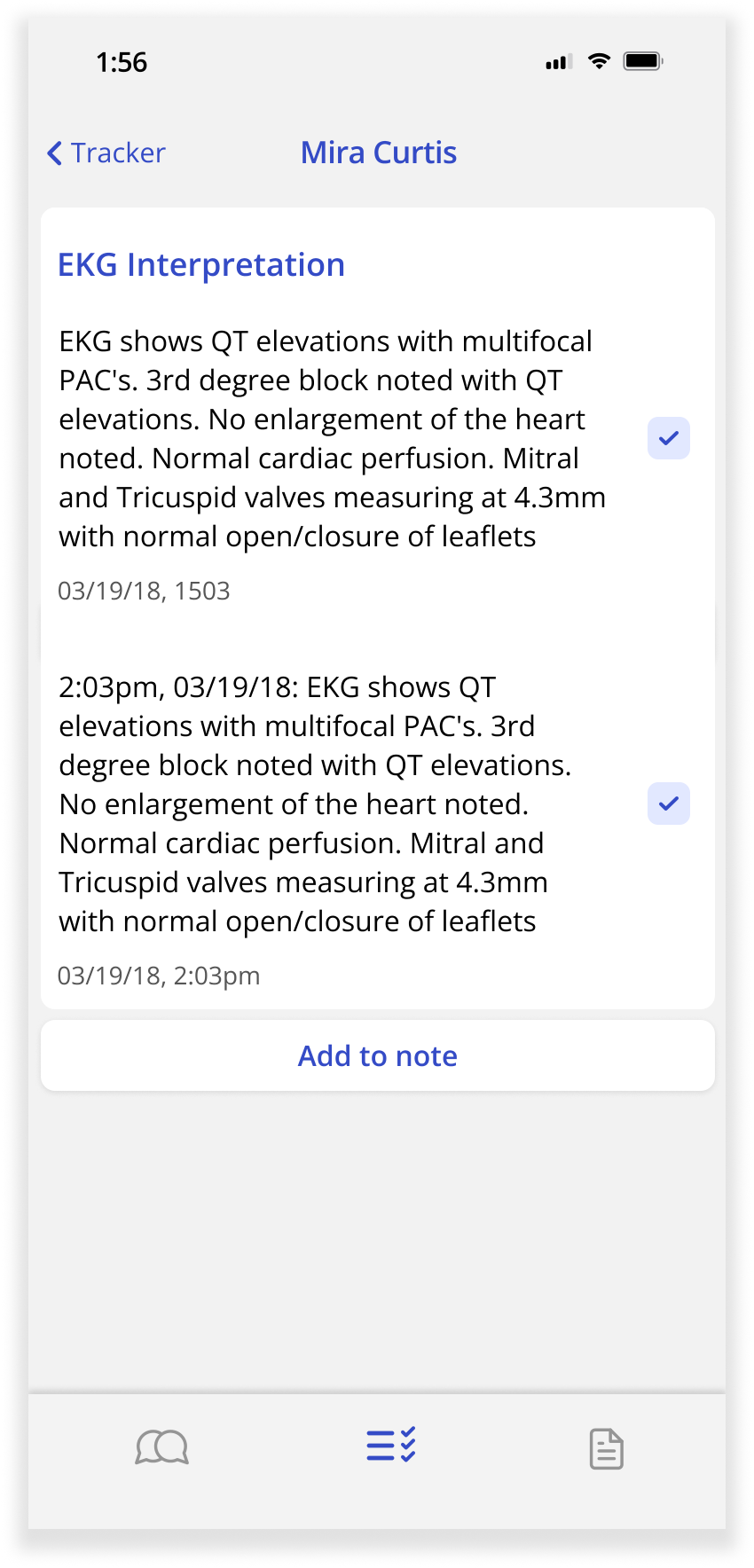
Surface
The AI surfaces clinical insights in context, to accept or correct.
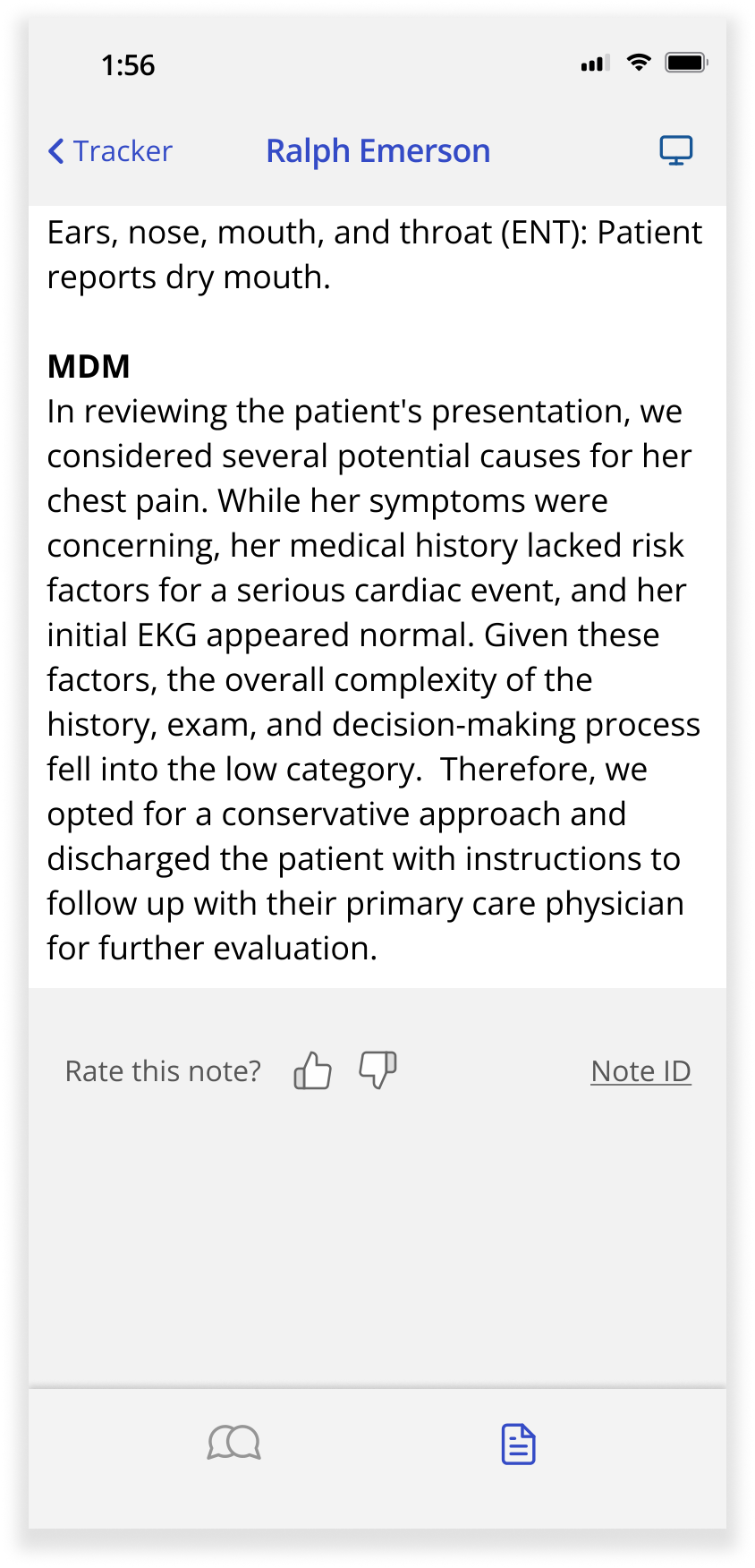
Rate
Any note can be rated in one tap, the lightest possible correction.
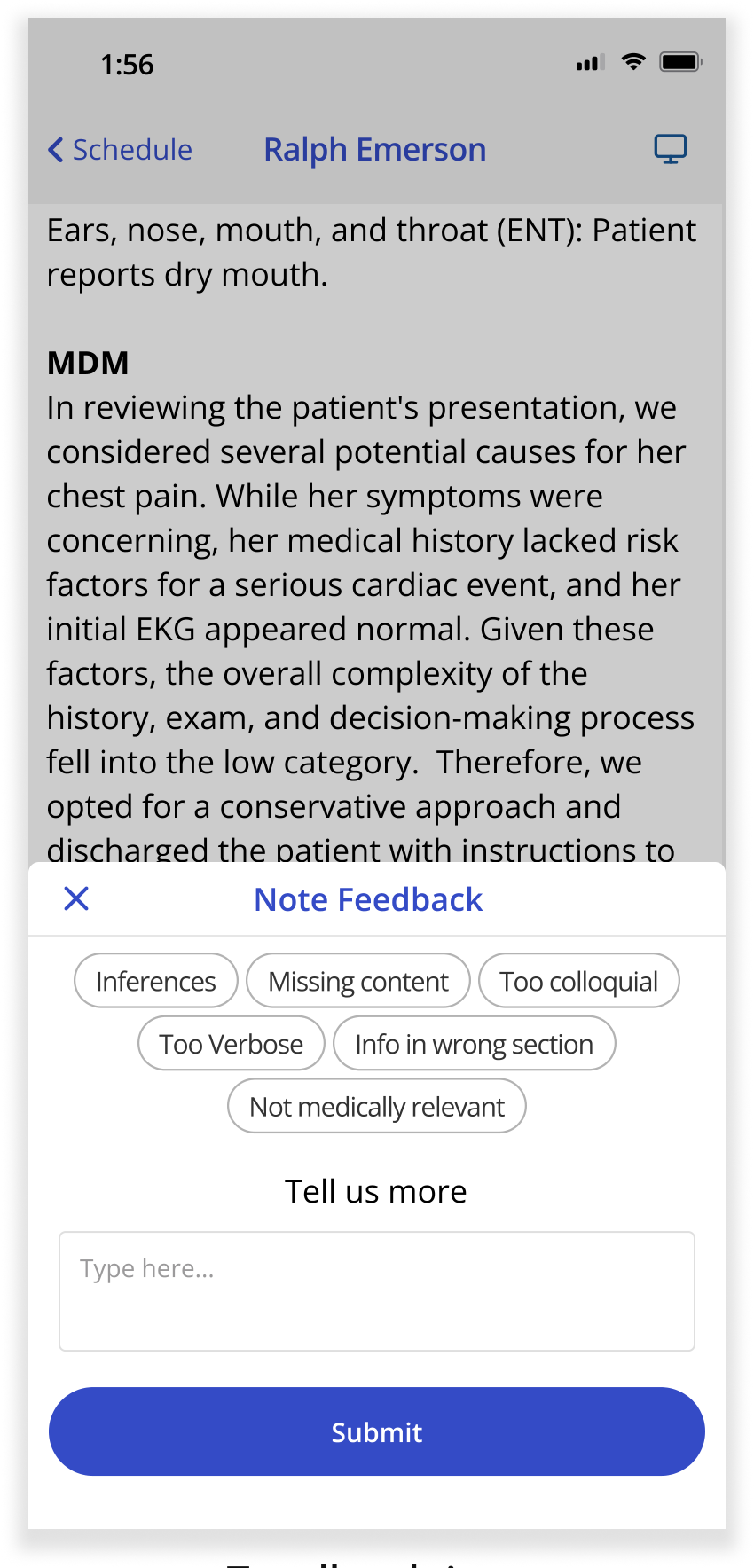
Repair
Structured feedback turns a correction into labeled training signal.
The pilot
1,500 clinicians, and the first AI scribe in the ED
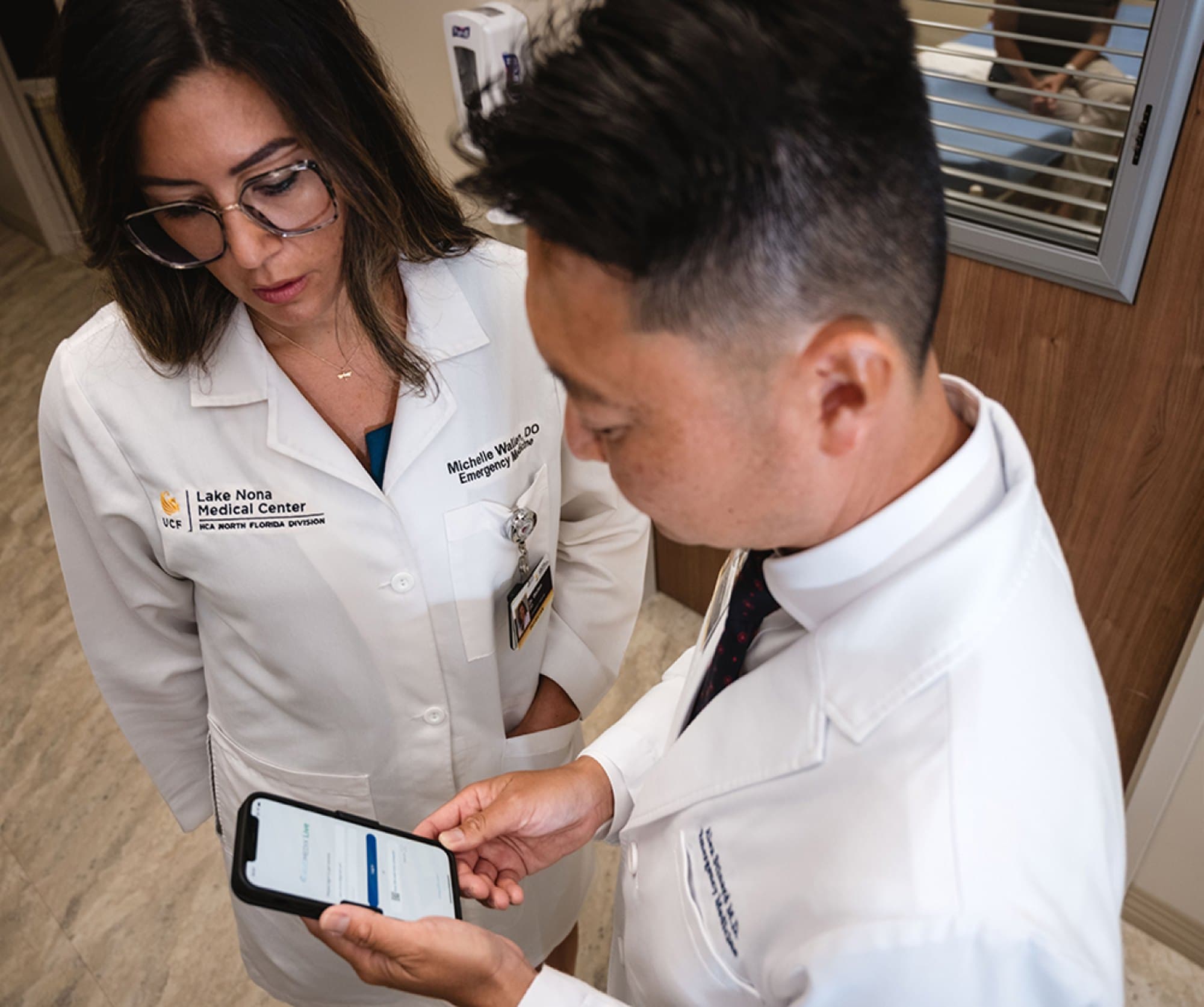
We piloted with HCA Healthcare, the largest healthcare provider in the country: 1,500 clinicians across every medical practice, including the emergency department. Augmedix Go ED went in as the first generative AI scribe deployed in an ED context.
The emergency department is the hardest room in the hospital to document in: fast, constantly interrupted, high-acuity, and the place where a clinician's attention is scarcest. Making it work there, where capture has to survive interruption and a note has to be reviewable in seconds, set the bar every other practice was held to.
Outcome
+65% engagement, then an acquisition
Engagement grew 65% in a year as one offering became four, measured on notes volume, workflow completion, and transcription accuracy. Not vanity metrics: the promise that turns a pilot into a workflow is a note clinicians trust, delivered into the EHR.
The pilot scaled from 25 clinicians to contracts for thousands across HCA and Sutter Health. In late 2024, Augmedix was acquired by Commure for $139M. The design system and product breadth were part of what made the platform worth buying. The modular principle I'd argued for stopped being my position and became the default the four product lines were planned against.
