Rocket
Meeting homeowners where they are: designing Liv, Rocket's conversational AI
- Role
- Conversational AI Experience Designer (founding designer on Liv)
- Timeline
- Sep 2022 – Aug 2023
- Scope
- End-to-end conversation journey, visual voice, conversation design system (B2B2C)
- Outcome
- −75% client onboarding time · +22% routing to lending bankers · 94% routing accuracy
Live product

Founding designer on Liv, Rocket's conversational AI for millions of homeowners. The whole game was trust: knowing when the AI should stop talking and hand off to a human.
Context
A legacy industry, at the worst possible moment
A mortgage is the biggest financial decision most people make, and buyers were facing rate spikes, economic uncertainty, and record-low home buying. Research showed ~32% of customers dropping off during onboarding. The mandate: meet them where they are with Liv, a conversational assistant across Rocket's ecosystem (Homes, Mortgage, Loans, Money) serving millions of homeowners.
Meeting them where they are
Two ways in: the familiar form, or a conversation
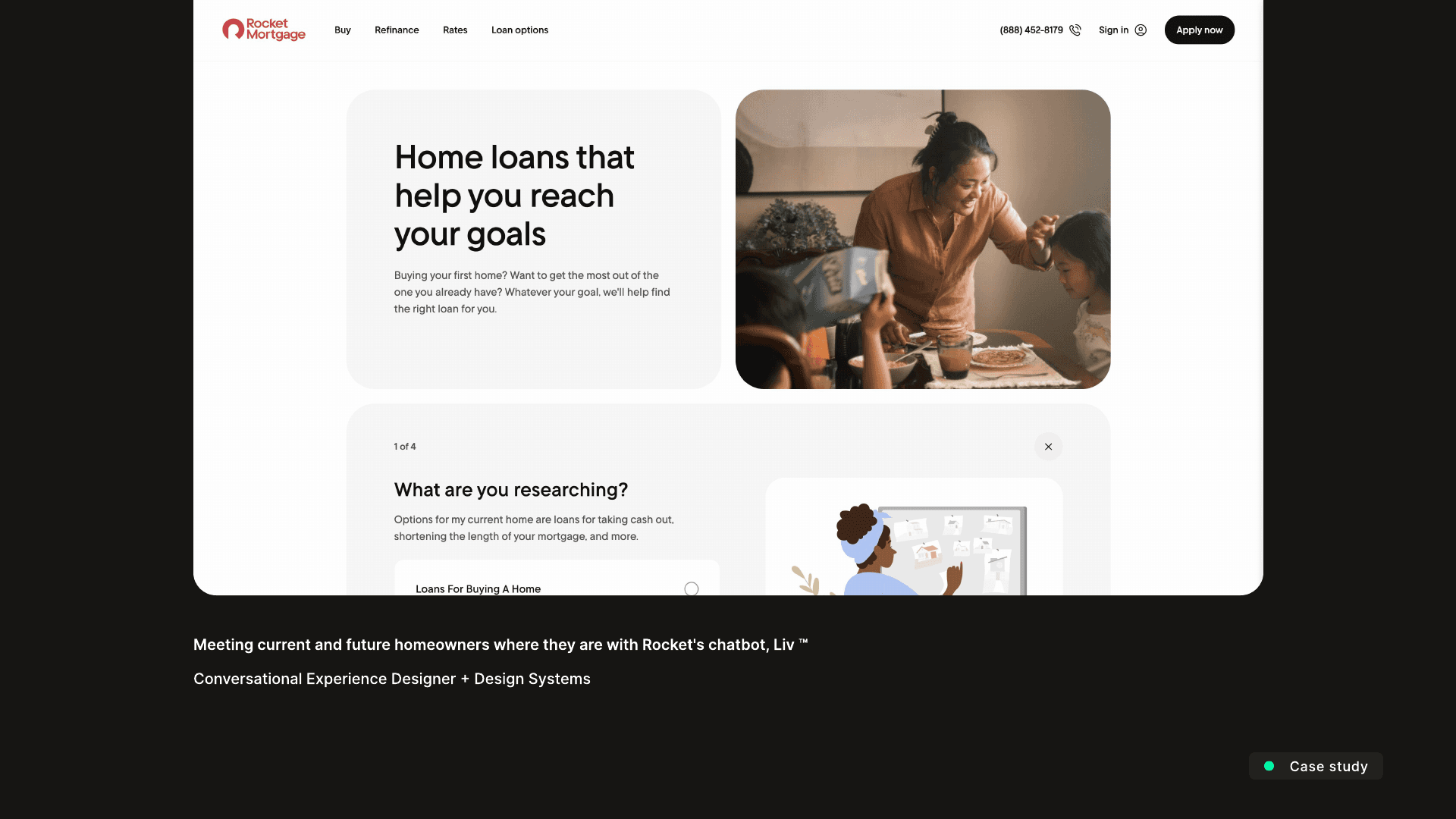
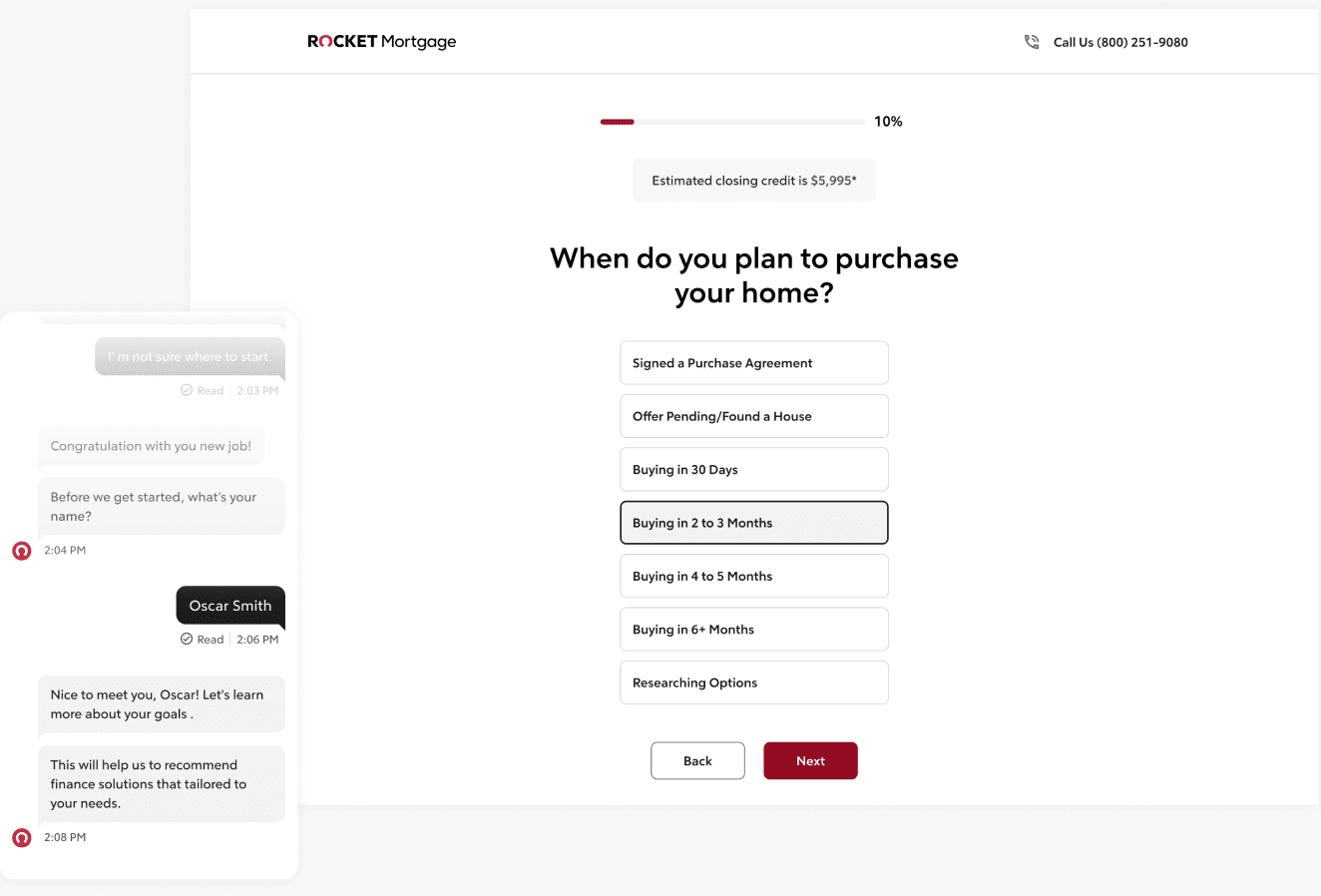
Some homeowners trust the familiar form; others would rather just say where they are. So I designed Liv in parity with Rocket's web onboarding: same questions, same estimated-credit math, same next step, as a form or as a conversation. The choice never costs progress.
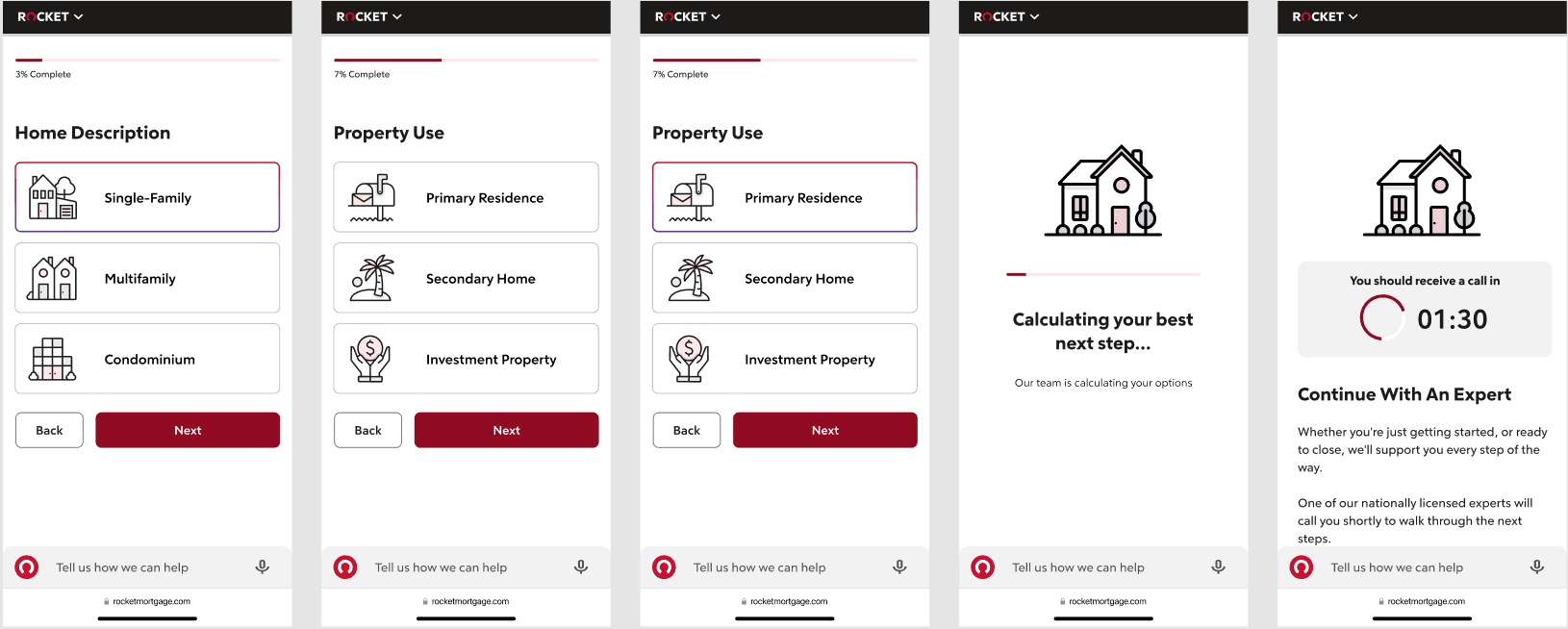
The parity held across devices too: the same guided onboarding on mobile, with Liv one tap away on every screen. The device changes; the questions and where a person lands do not.
The hard problem
A chatbot can't fake its way through a mortgage
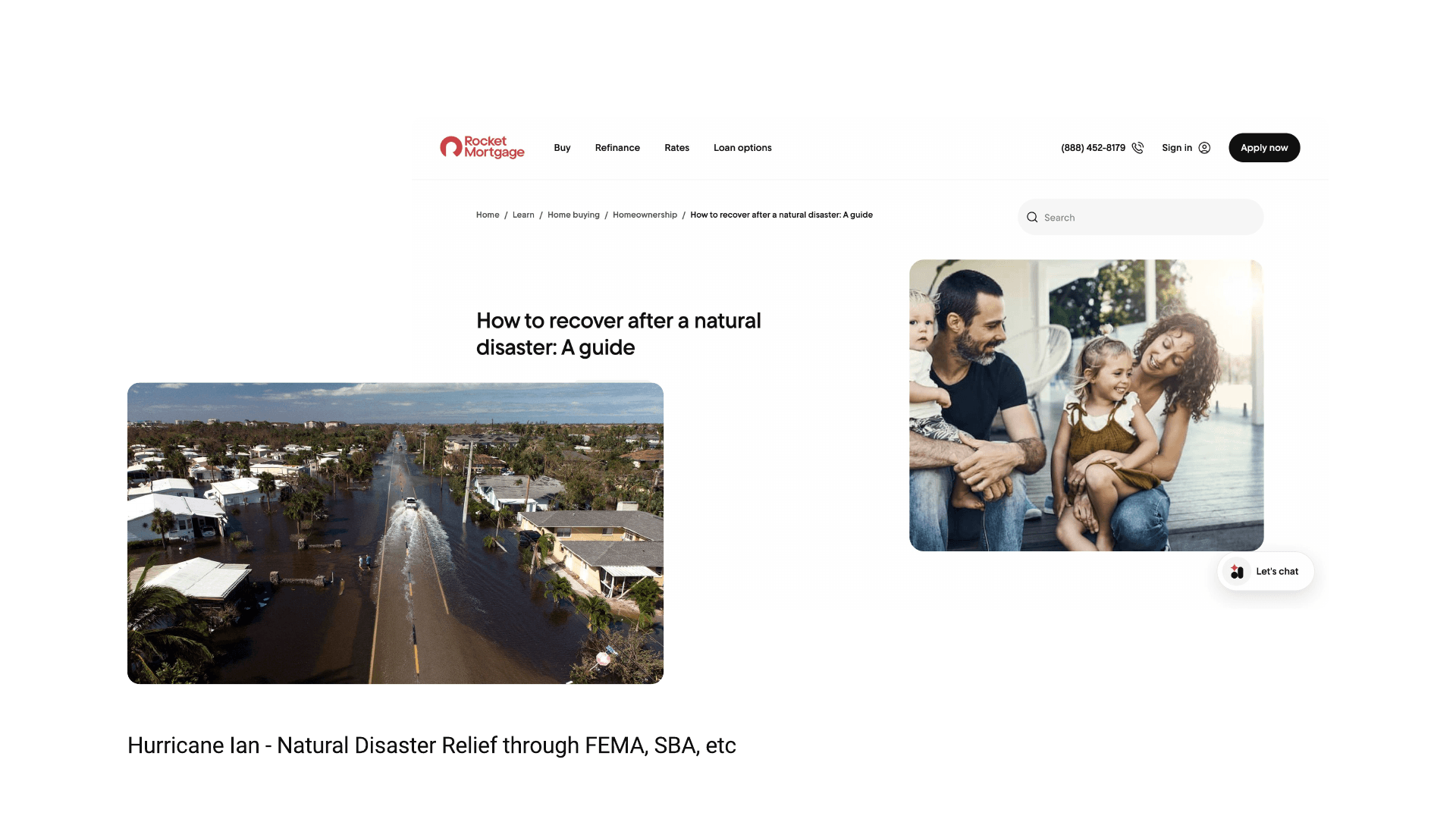
People won't hand the largest transaction of their lives to a bot that bluffs, and bankers won't trust a system that sends them the wrong clients. The design question wasn't "what can Liv say?" but when should Liv stop talking: when to collect context, when to hand off to a human, and how to do both in Rocket's voice without pretending to be a person.
The system
A conversation design system, not a script
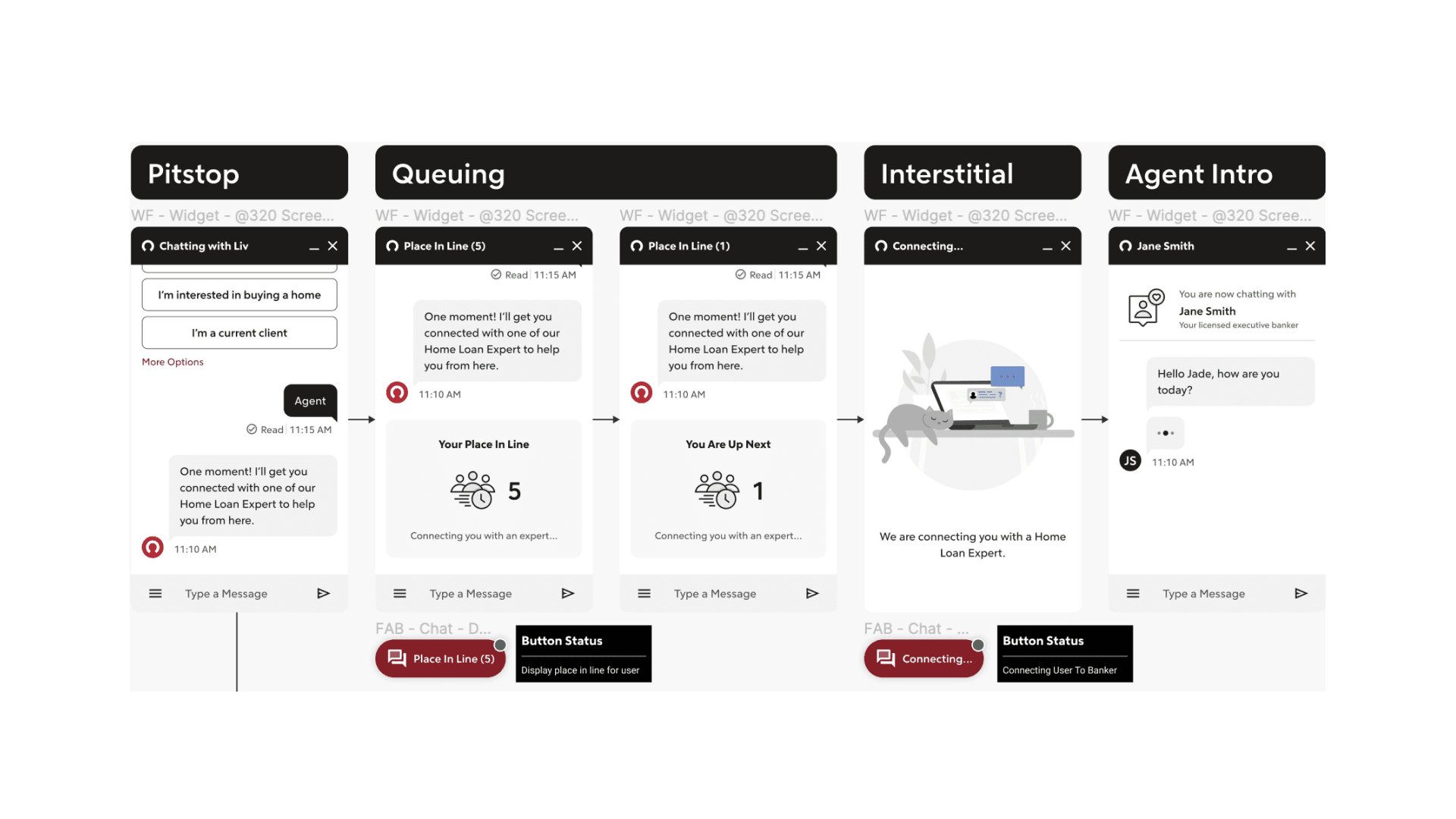
I owned Liv's end-to-end journey and visual voice, and built the conversation into four reusable patterns:
- Pitstop: pace the conversation so it never overwhelms.
- Queueing: hold context while a human becomes available.
- Interstitial: keep progress visible between steps.
- Agent Intro: hand off to a banker without losing anything.
Rebuilding onboarding around these patterns cut client onboarding time 75%.
How Liv works
Entry points
One personalized conversation
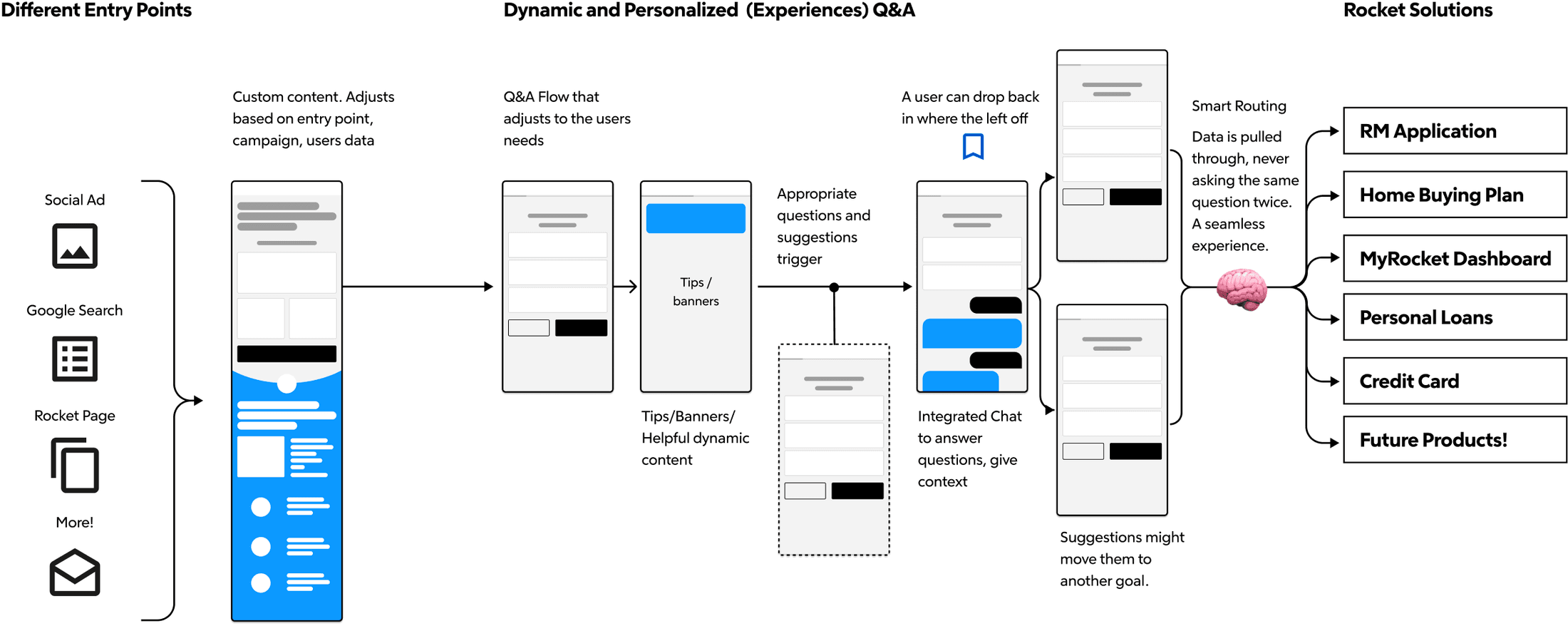
Liv adapts the Q&A to the entry point, campaign, and what it already knows about the user.
Smart routing
Full context is carried through, so the homeowner never repeats themselves and the right banker gets the handoff.
The right solution
many ways in · one conversation · the right way forward
The craft was in the unhappy path. Liv hands off on low confidence rather than guess: it stops talking, summarizes what it has, and queues a human, with the full conversation context attached so the homeowner never restarts from zero. That's what the 94% really measures: how much the banker already knew when the conversation landed in front of them.
Outcome
Trusted by users, and by the bankers behind them
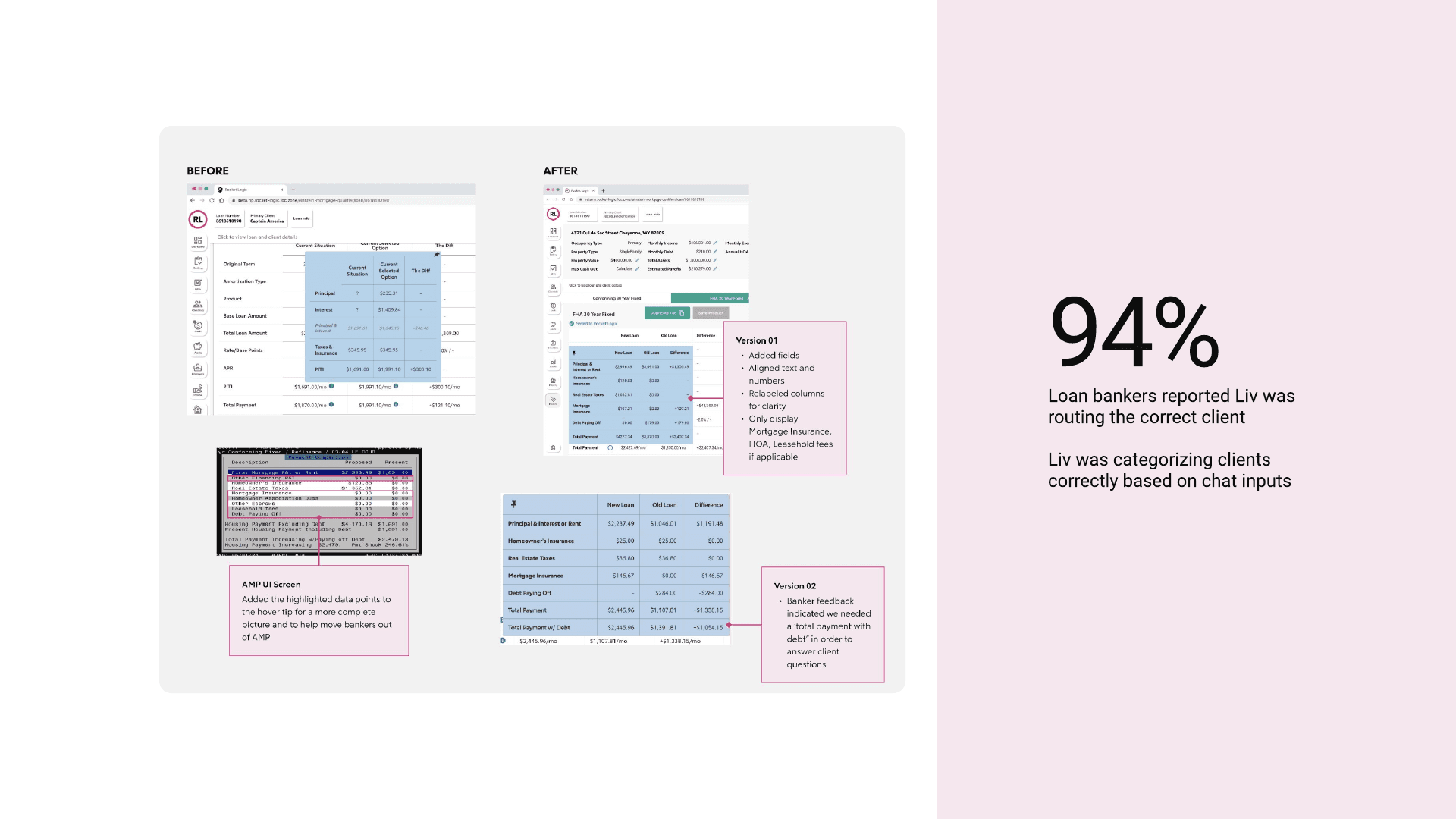
Where Liv ran, engagement rose 11% and routing to a lending banker rose 22%. The number I'm proudest of is the quietest: 94% of loan bankers said Liv routed them the correct client. The human side of the loop trusting the AI side.
What didn't go to plan: conversion stayed softer than engagement, no conversation design outruns mortgage rates, and bankers needed real training on how client data reached them. Next time, the human's onboarding gets designed as deliberately as the user's.
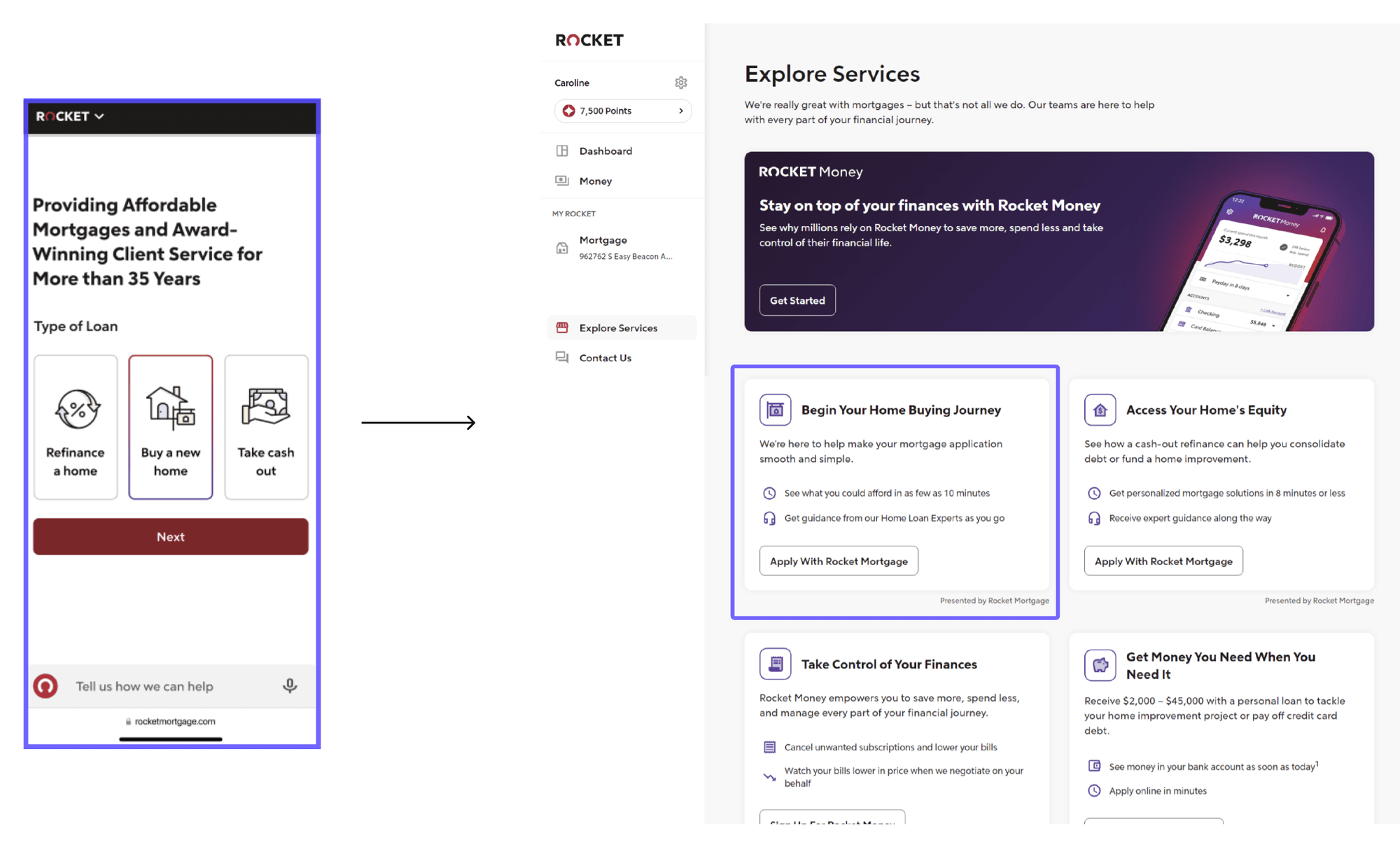
The payoff is what Liv leaves behind. What a homeowner tells Liv, loan type, timeline, goals, personalizes their Rocket dashboard: the right next step surfaced first, the services that fit them up top, the rest out of the way. The conversation isn't a detour from the product; it becomes the product's memory.